Injection Molding Services
3ERP provides low-volume and mass production injection molding services.
- Thermoplastic
- Thermoset Silicone
- Metals
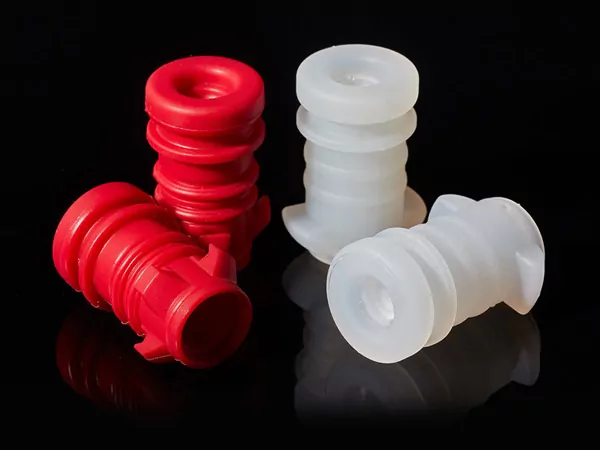










Whatever you need low-volume injection molded parts or large quantities of end-use production moldings? Then you can’t go wrong with our injection molding services. At 3ERP, we produce high-quality prototype moldings from rapid tooling in aluminum or soft steel with quick turnaround times as little as 7 days. So that our customers can verify their designs for manufacturability, functionality and quickly test out the market. We also offer plastic and metal production moldings for your high-volume production needs. Our team of experienced specialists can offer a cost-effective solution at each stage.
Our Injection Molding
Capabilities

Plastic Injection Molding Service
The most popular custom plastic injection molding process, thermoplastic, is suitable for consumer products, automotive components, and many other applications.

Liquid Silicone Rubber Molding Service
Inert and biocompatible, liquid silicone rubber can be used for molded medical items such as fluid management and respiratory devices

Metal Injection Molding Service
Suitable for small and detailed metal parts, MIM is cost-effective in large volumes and wastes less material than CNC machining.

MACHINES

Moq

MADE MONTHLY

METAL MATERIALS
Injection Molding Gallery


Why Choose Us


No MOQ
We offer prototype injection molding by using aluminum molds, which allows us to accept orders for just a few hundred moldings or even just one piece. This is the best way to test your moldings at the lowest cost before making production molds.

Design Optimization
As soon as we receive your RFQ, our mold tooling and molding specialists will analyze your molded parts and provide DFM analysis report within 24 hours. This helps you to get the best results in terms of quality and cost.

Consistency and High Quality
We guarantee that each custom molded part is equal in quality to the inspection sample given to the customer. This is thanks to our certified injection molding factory, in-process inspections, and dimensional verification after production.

High Efficiency and Fast Delivery
Aside from our own injection molding machines, we have built up strong networks with our partners, which means we can get your moldings done without any queuing time. Our molding specialists can find the right parameters for your moldings in no time at all.

Stay affordable and we hope to continue working with you for a long time.






Prototype and Production Moldings
Made Easy
Upload your part to see if it’s eligible.
Upload CAD file

Quote & Design Analysis

Order Confirmation

Parts Shipped

Addition Injection Molding Options

Overmolding
The overmolding method is often cheaper and more effective than other manufacturing approaches that require creating and assembling component material parts separately. The process can also build layered parts from scratch or add a resistant outer layer to existing plastic parts and tools, providing a rugged exterior. Toothbrushes consisting of a solid plastic body and rubberized grip are an example of an overmolded product.

Insert Molding
Common parts made with insert molding include sharp handheld tools, such as scalpels that consist of a metal blade partially housed within a plastic handle. This manufacturing process is also frequently used to create inserts incorporating bushings, clips, and fasteners.
From Prototyping to Mass Production
3ERP offers one-stop manufacturing solutions. Whatever your need rapid tooling for prototype molding or production tooling for mass production parts.

Prototyping & Low-Volume Production
The prototype molds are normally made as single mold cavity in aluminum or P20 steel. With hand-loaded inserts to avoid using cylinders and lifters. Standard stock mold base is another fact to lower the mold cost. It is the best way to get a few prototypes in real materials for testing, or to create a few hundreds and thousands of bridge production parts in a very short lead times.

Mass Production
When you are ready for million+ of mass production moldings, it is important to keep the injection molding cost as low as possible. That’s why production injection mold tools are made as multi cavities to reduce the cycle time, and fully hardened tool steel to ensure the tool life. In the meantime, robots are widely used to cover the labor cost.
into production today
Injection Molding Materials,
Surface Finishes and More

Mold Tooling and Molding Materials

Surface Finishes

Classes of Injection Mold

Discover More About Injection Molding
Injection Molding Applications

Aerospace

Automotive

Consumer Products

Education

Energy

Industrial Machinery

Medical


