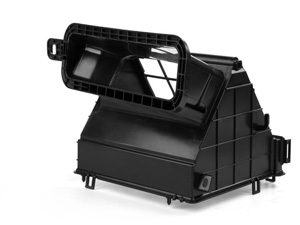
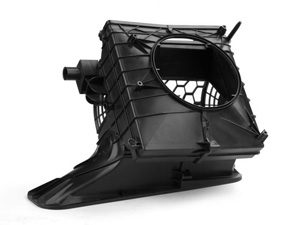
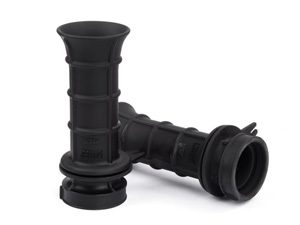
3ERP is fully capable of handling your vacuum casting and silicone molding needs. With years of expertise in the field, we can fabricate your plastic parts to the highest standard, as well as cost-efficient and with fast turnarounds.
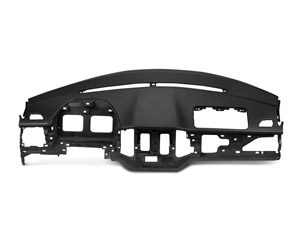
Vacuum casting is a great method to make rigid or flexible parts, and is ideal for high quality prototypes, function testing, concept proofing and display demos. Urethane casting parts can be made from a few to hundreds as required.
Contact us today for more information about our casting services.
3ERP can provide up to 20 parts in 15 days or less, depending on part specification and volume.
2 Affordability
Silicone molds are less expensive than the tooling used for injection molding, resulting in low prices.
3 Capable of producing large parts
Depending on the type of equipment used, vacuum casting can create very large parts.
4 Superior surface finish to injection molding
The vacuum process removes air bubbles and allows the material to capture fine details.
5 Color options
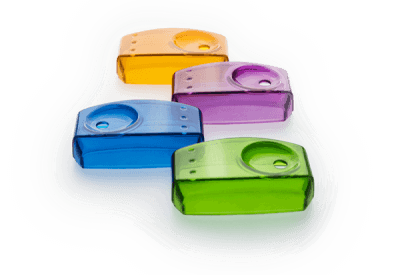
Coloring pigments can be added to the resin for a variety of color options.
6 Repeatability
Silicone molds can be used around 20 times before they need replacing.
Common Vacuum Casting Applications
Visual prototypes
Concept proofs
Cases and covers
Low-volume production
Market testing
Investor pitches
Trade shows
What is Vacuum Casting?
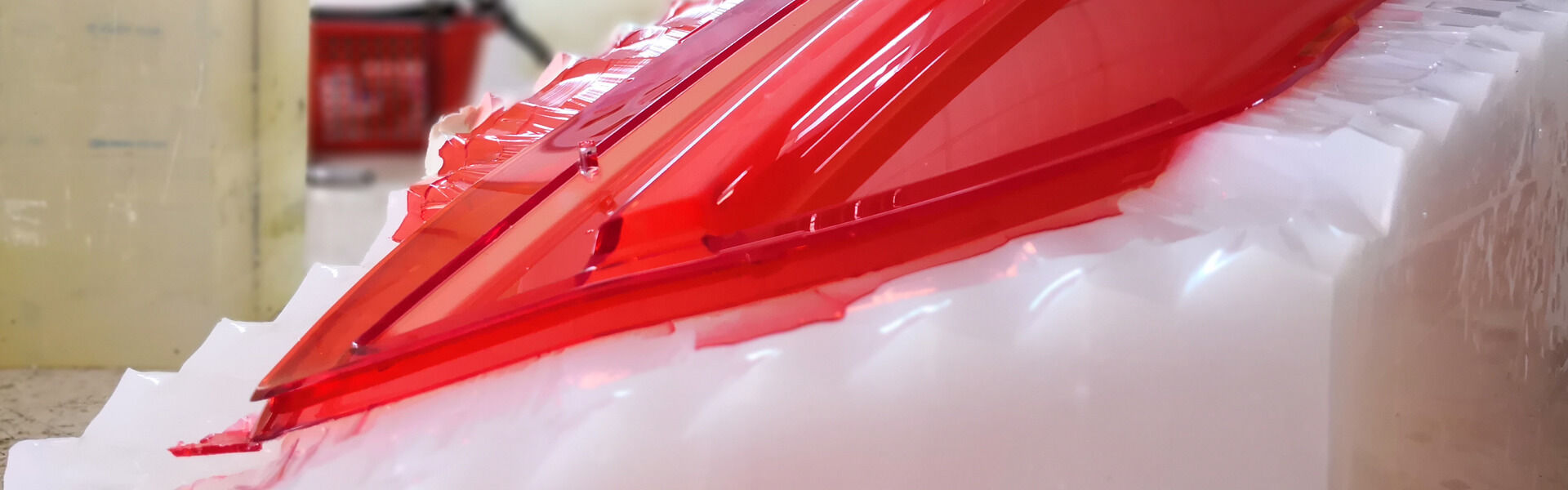
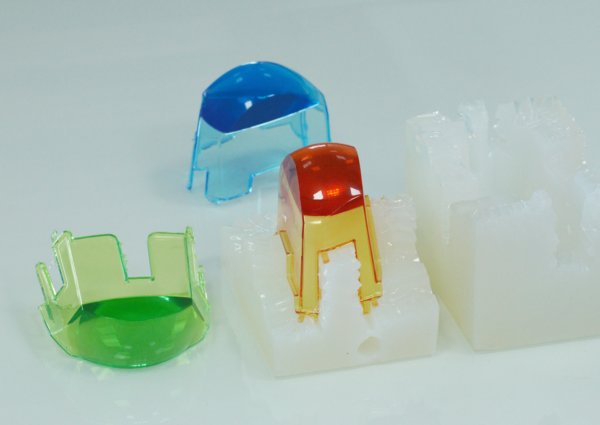
Vacuum casting is a manufacturing technology that uses a vacuum to draw liquid casting material into a mold. It differs significantly from injection molding, which pushes liquid material into a mold using a screw. The process of vacuum casting offers significant advantages, and is particularly useful for parts that have undercuts or fine details. The process starts with a master model, which 3ERP creates using one of its CNC machining centers — though 3D printing can also be used. This master model is then immersed in liquid silicone, which is cured and becomes the mold. Once it has been cut and the master model removed, the silicone mold can be put to use. This stage involves pouring casting resin into the mold, as the vacuum removes bubbles and air pockets to ensure a smooth finish. The resin part is then cured in an oven and removed from the silicone mold after cool down, which can be reused around 20 times. Each cast part is an exact copy of the original master model. It’s a perfect solution for rapid prototyping and making small batches of quality parts.
Vacuum Casting Process
Step 1:Master building
Masters are 3D solids of your CAD designs. They are usually made by CNC machining or with 3D Printing. Making Master in 40° temperature. After finish and inspect the masters, we will move to silicone mold making.
Step 2: Mold making
Casting molds are made from liquid silicone. Half-Fill the casting box with liquid silicone, Heat the casting box until silicone is fully cured and then allowed to cure in an oven for 16 hours. Fill with extra silicone liquid which is also heated & cured. Once dried, the mold is cut open and the master removed.
Step 3: Make the parts
Poured the casting resins into the empty cavity to create a highly accurate copy of the original. It’s even possible to overmold with two or more materials. Silicone molds are typically good for 20 or so copies of the master pattern.
Vacuum Casting Technical Specifications
Typical lead time
Up to 20 parts in 15 days or less, depends on the part specification and volumes.
Accurate
± 0.3% (with lower limit on ± 0.3 mm on dimensions smaller than 100 mm)
Minimum wall thickness
To ensure that the mold is filled properly, a wall thickness of at least 0.75 mm is necessary. For best results, we recommend a wall thickness of at least 1.5 mm
Maximum part dimensions
The size of the mold is limited by the dimensions of the vacuum chamber (1900 x 900 x 750 mm) and by the volume of the product (maximum volume: 10 liters)
Typical quantities
Up to 25 copies per mold (depending on the mold’s complexity and the casting materials)
Color & Finishing
Pigment is added to the liquid polyurethane prior to casting, custom painting and texture.
Vacuum Casting FAQ
Why would I choose vacuum casting over injection molding?
Vacuum casting is a more affordable alternative to IM, especially in low volumes. It also offers unique advantages like an excellent surface finish.
Can I make production-quality parts using vacuum casting?
Vacuum casting is best for making visually impressive prototypes, but it can also be used for non-mechanical end-use parts like cases and covers.
What happens to the silicone mold(s)? Can I keep them?
The silicone molds used in vacuum casting have a short lifespan, typically around 20 moldings, so we dispose of them after use.
If you wish to keep the 3D printed or CNC machined master model, talk to us directly.