Logo

Custom Sheet Metal Fabrication Services

Get instant quotes for your sheet metal fabrication prototyping, and production parts. Custom parts and assemblies in as fast as 5 days. Upload your design and get started today.
  • Precision Quality with Fast Lead Time
  • Wide Material & Finishes Selection
  • ISO 9001:2015 Certified
Decreasing Shrinkage in Metal Die-Casting
Iso

ISO

9001:2015 Certified
Mat Sheet (1)

+

Sheet metal materials
Tolerence Sheet

±0.1 mm

Tolerance achievable
Fast Timing

5-day

Fast lead time
Trusted by companies like

Sheet Metal Fabrication

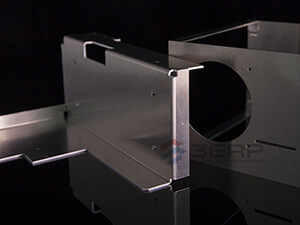
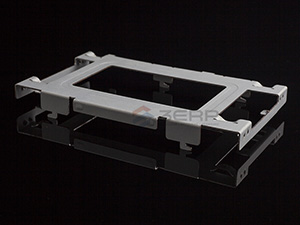
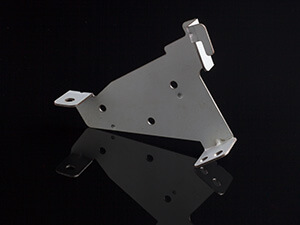
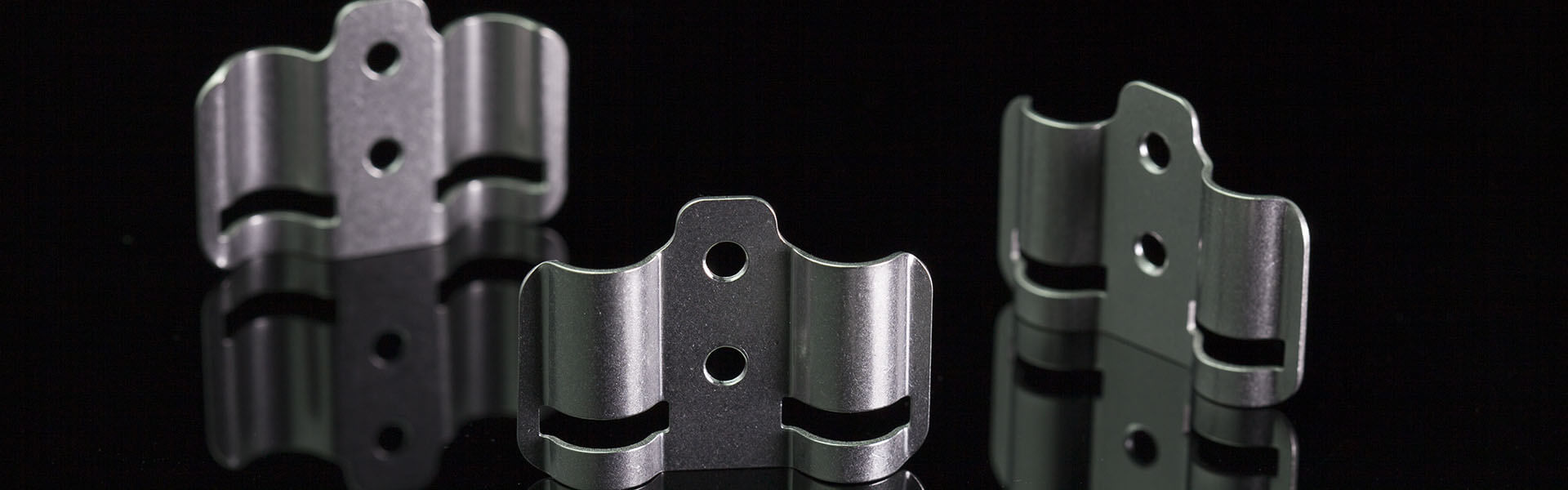
3ERP’s custom sheet metal prototyping services offer a fast and cost-effective solution for your projects. Services including bending, punching, cutting standard gauge metal for both prototypes and low volume production runs. Sheet metal fabrication produces durable, end-use metal parts with a wide selection of materials and finishes that meet your specifications, for a variety of industries like: Automotive, Medical device, Aerospace, electronics, energy and robotics.

Why Choose 3ERP for Sheet Metal Fabrication?

Diverse Fabrication Methods

We offer a full range of sheet metal processes, including laser cutting, bending, stamping, deep drawing, and welding, to handle complex designs with precision. We deliver high-quality, precision sheet metal fabrication parts tailored to your specifications.

No Minimum Order Quantity

From one-off prototypes to high-volume production, we accommodate projects of any size—ideal for startups, R&D teams, and mass production. We manufacture common industrial components such as enclosures, brackets, and frames.

Fast Turnaround Times

Thanks to streamlined workflows and in-house expertise, we deliver parts quickly without compromising quality, perfect for tight development timelines.

Material Versatility & Quality Assurance

We work with aluminum, steel, stainless steel, copper, and more, combined with strict quality control to ensure every part meets your exact specifications.

Get your custom sheet metal parts today

All information and uploads are secure and confidential.
Get Your Instant Quote

How does sheet metal fabrication work?

Because thin sheets of metal are more malleable than a thick workpiece, they can be manipulated using different processes.

These processes fall into three general categories:

Material removal

In which the sheet metal is cut in various ways

Material deformation

In which the sheet metal is bent or formed

Material assembly

In which the sheet metal is joined to other components

Removal Methods for Sheet Metal

Laser Cutting

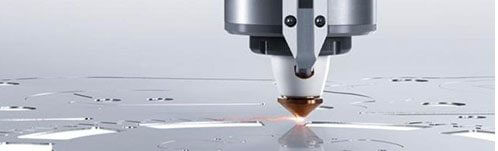
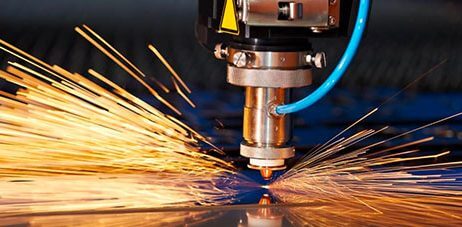
Laser cutting is a precise and efficient method used in sheet metal fabrication. It focuses a high-powered laser beam—typically around 0.001″ (0.025 mm) in diameter—onto the material to produce clean, accurate cuts.

With focal lengths between 1.5″–3″ (38–76 mm), it delivers tight tolerances (up to ±0.002″ / 0.05 mm) and narrow kerf widths (0.006″–0.015″ / 0.15–0.38 mm). Laser cutting is ideal for complex shapes and fine details, though it may not be suitable for very thick metals.

Advantages: high precision, minimal finishing, and broad material compatibility.

Water Jet Cutting

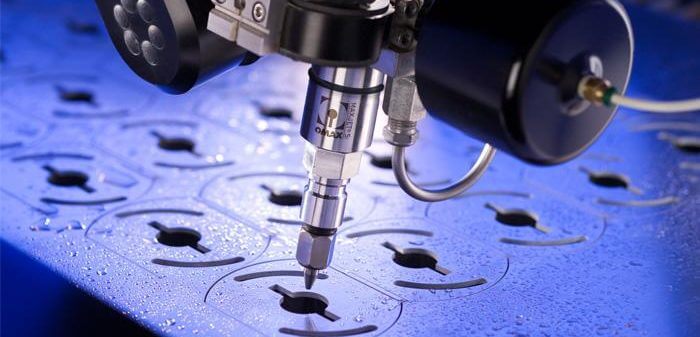
Water jet cutting uses a high-pressure stream of water—often mixed with abrasive material—to cut through sheet metal. This method is especially effective for thicker materials.

Unlike laser or plasma cutting, water jet cutting is a cold-cutting process that produces no heat-affected zone (HAZ). It’s ideal for metals with low melting points or materials that require no thermal distortion.

Typical part accuracy reaches ±0.002″ (0.05 mm), with kerf widths between 0.006″–0.015″ (0.15–0.38 mm). It also supports a wide range of materials without altering their properties.

Advantages: no thermal damage, high precision, material flexibility.

Plasma cutting

Plasma cutting uses a high-temperature plasma arc to cut through sheet metal. It forms an electrical channel of superheated ionized gas, enabling fast, efficient cuts with relatively low setup costs.

Ideal for thick materials—up to 6″ (150 mm)—plasma cutting is more powerful than laser or water jet systems, though typically less precise. Computer-controlled machines handle cuts up to 0.25″ (6.35 mm) thick with ease.

Part accuracy is around ±0.008″ (0.2 mm), and cutting speeds can reach 200″ (5.08 m) per minute on 16-gauge mild steel.

Advantages: high cutting speed, low cost, great for thick metals.

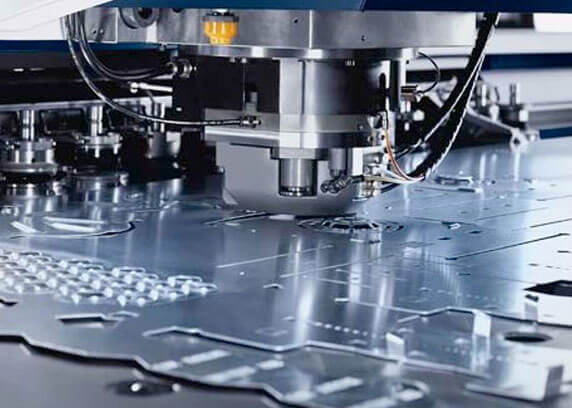
Punching

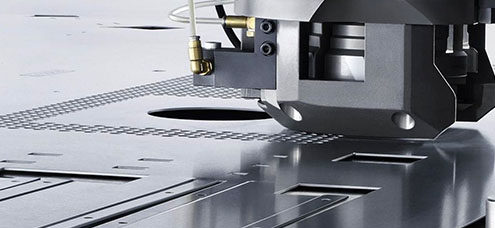
Punching is a fast and cost-effective method for creating holes or cutouts in sheet metal. The process sandwiches the sheet between a punch and die—when the punch drives into the die, it shears a hole through the material.

It’s especially efficient for repetitive hole patterns or irregular shapes, which can be formed by a series of small, closely spaced punches.

Punching works well with most sheet metals, but hole diameters should generally exceed the sheet thickness for optimal accuracy and edge quality.

Advantages: high-speed production, low tooling cost, ideal for perforated designs.

Deformation Methods for Sheet Metal

Bending

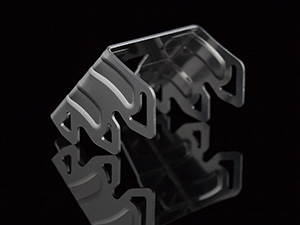
Bending is a forming process to shape sheet metal into V-, U-, or channel profiles using a press brake. The metal is clamped and pressed to a specific angle, typically up to 120°, depending on its thickness and tensile strength.

Due to material elasticity, sheet metal is often over-bent to compensate for springback, ensuring the final angle meets design requirements.

Bending is ideal for creating enclosures, brackets, and structural components with precise angles and repeatability.

Advantages: cost-efficient forming, high repeatability, compatible with various metals.

Stamping

Stamping is a high-speed forming process that uses a mechanical or hydraulic die to press sheet metal into a desired shape. It’s commonly performed on cold sheet metal, though friction during the process generates localized heat.

Stamping enables a wide range of part features through sub-processes such as:

  • Coining: impresses patterns into the surface
  • Curling: rolls edges into tubular shapes
  • Hemming: folds metal onto itself for strength
  • Ironing: reduces wall thickness for uniformity

Ideal for high-volume production, stamping ensures consistent shapes with tight tolerances.

Advantages: fast cycle time, precise detail, excellent for mass production.

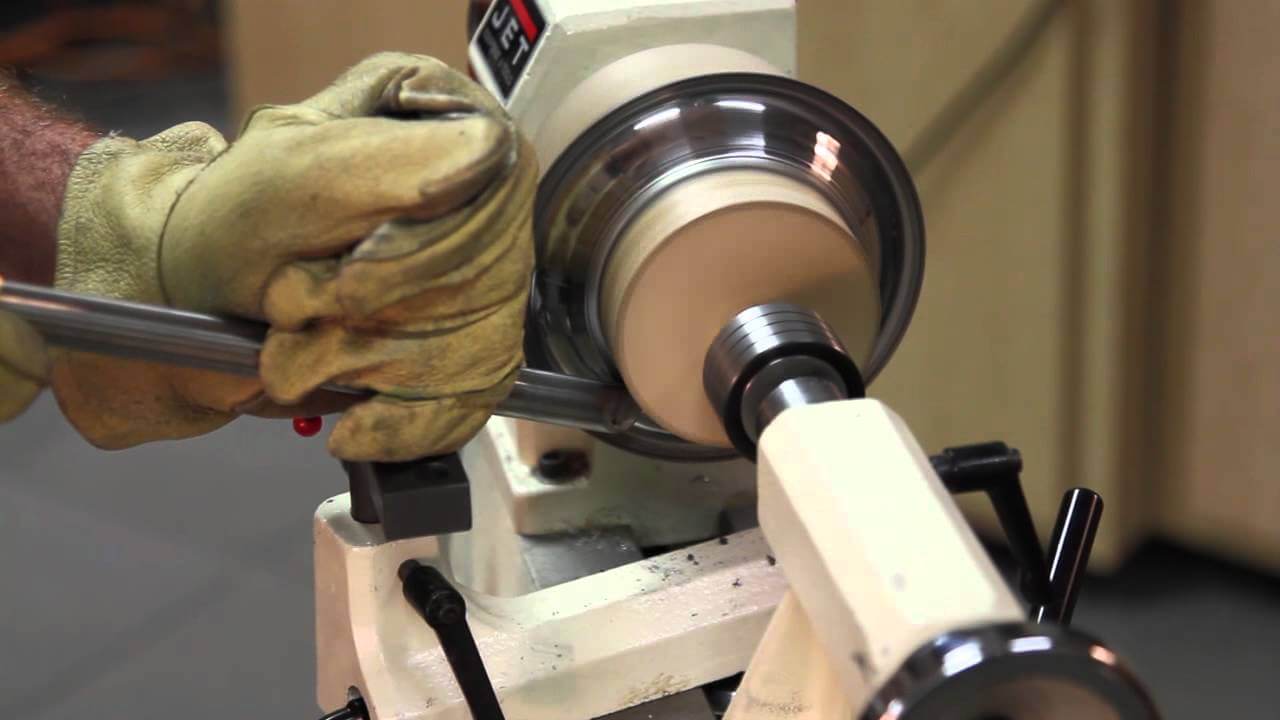
Spinning

Spinning is a metal forming process used to produce hollow, symmetrical parts with smooth, rounded features—similar in concept to pottery wheel forming.

In this process, a sheet metal blank is rotated on a lathe and pressed against a shaped tool, forming the material into its final contour. Spinning can be done manually or mechanically, depending on complexity and volume.

Common shapes include hemispheres, cones, and cylinders, making spinning ideal for components like reflectors, nozzles, and decorative parts.

Advantages: smooth finishes, low tooling cost, ideal for rounded geometries.

Assembly Methods for Sheet Metal

Assembly

Assembly is the final stage of sheet metal fabrication, where multiple parts are joined to form a complete product. Components can be connected using fasteners, welds, rivets, or other standard joining methods.

This process typically follows any required cutting, forming, and surface finishing, ensuring all parts are ready for integration.

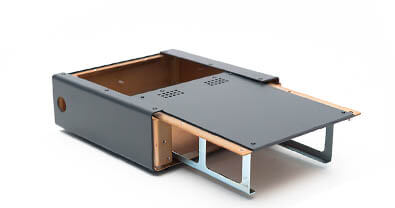
Assembly is essential for creating functional structures such as enclosures, frames, and mechanical housings, especially in complex or multi-part designs.

Advantages: product readiness, design flexibility, supports both manual and automated methods.

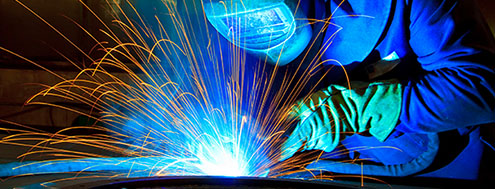
Welding

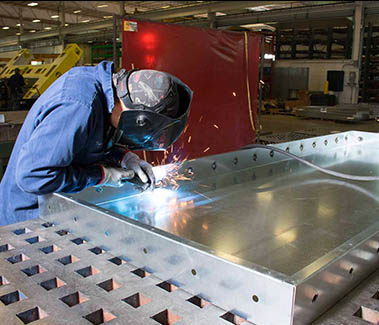
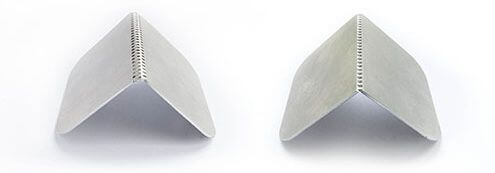
Welding is a joining process that fuses sheet metal parts using high heat, creating a strong, permanent bond between components. It is commonly used in structural and enclosure applications.

Materials like aluminum and stainless steel offer excellent weldability, making them ideal for sheet metal welding. The specific technique—such as TIG, MIG, or spot welding—depends on the material type, thickness, and application.

Welding is typically performed after forming and before finishing, ensuring structural integrity and seamless assembly.

Advantages: strong joints, permanent bonding, compatible with various metals.

Choosing the right manufacturing method is key to achieving the desired part quality. Not sure which method suits your needs?

Common Sheet Metal Applications

  • Appliances
  • Chassis
  • Fuselages
  • Body panels
  • Doors
  • Kitchen equipment
  • Brackets
  • Enclosures
  • Office equipment

3ERP Sheet Metal
Fabrication Advantages

Sheet Metal Prototype Fabrication

With fast lead times, no minimum order volumes, and low-per-unit costs, rapid sheet metal is a great option for functional prototyping.

Low-Volume Production

Low-volume production (around 100K parts) can accelerate your product’s market entry. 3ERP specializes in delivering high-quality custom metal parts for such needs.

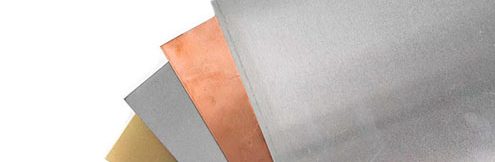
Sheet Metal Materials

High-quality sheet metal materials such as aluminum, stainless steel, and brass are available, ensuring consistent quality and reliable performance across all parts.

Aluminum

Aluminum

Brass

Brass

Copper

Copper

Steel

Steel

Stainless Steel

Stainless Steel

Aluminum

Aluminum can be used for SLM/DMLS(direct metal laser sintering), providing lightweight strength and corrosion resistance—ideal for aerospace components and structural applications.
Color
Alloys
Aluminium 7075-T651 | 3.4365 | 76528 | AlZn5.5MgCu Aluminium 6082-T651 | 3.2315 | 64430 | AlSi1MgMn Aluminium 6060 | 3.3206 | AlMgSi Aluminium 5052 | EN AW-5052 | 3.3523 | AlMg2,5 Aluminium 2017 | 3.1325 | 24530 | AlCu4MgSi
Available Finish
As machined, Anodizing, Powder coating, Electroplating, Painting, Sand blasting, Polishing
Price
$$
Lead Time
About 5 business days

Brass

Color
Alloys
H59, H62, C260, C360
Available Finish
As machined, Polishing, Sand blasting, Tumbling, Electropolish, Alodine, Heat treatment, Black oxidize, Electroless nickel, Chrome plating, Brushed finish
Price
$$$
Lead Time
About 5 business days

Copper

Color
Alloys
C11000, C10100, C10200
Available Finish
As machined, Polishing, Sand blasting, Tumbling, Electropolish, Alodine, Heat treatment, Black oxidize, Electroless nickel, Chrome plating, Brushed finish
Price
$$$
Lead Time
About 5 business days

Steel

Color
Alloys
Structured Steel, Mold Steel, Alloy Steel, Tool Steel, Bearing Steel, Carbon Steel
Available Finish
As machined, Electroplating, Passivation, Powder coating
Price
$$$
Lead Time
About 7 days

Stainless Steel

Stainless steel, printed via SLM/DMLS, delivers high strength and corrosion resistance for tooling, medical devices, and mechanical parts.
Color
Alloys
Stainless steel 416 | 1.4005 | X12CrS13
Stainless steel 15-5 | 1.4545 | X5CrNiCu15-5
Stainless steel 301 | 1.4310 | X10CrNi18-8
Stainless steel 430 | 1.4016 | X6Cr17
Stainless steel 440C | 1.4125 | X105CrMo17
Stainless steel 420 | 1.4028 | X30Cr13
Stainless steel 304/304L | 1.4301/1.4307 | X5CrNi18-10/X2CrNi18-9
Stainless steel 2205 Duplex | 1.4462 | 2205 | X2CrNiMoN 22-5-3
Stainless Steel 17-4 PH | 1.4542 | X5CrNiCuNb16-4 - Annealed state
Stainless steel 303 | 1.4305 | X8CrNiS18-9
Stainless steel 316/316L | 1.4401/1.4404 | X5CrNiMo17-12-2/X2CrNiMo17-12-2
Available Finish
As machined, Electroplating, Passivation, Powder coating
Price
$$$
Lead Time
About 7 business days

Titanium

Titanium offers a high strength-to-weight ratio, low thermal expansion, excellent corrosion resistance, and is biocompatible, making it ideal for aerospace, medical implants, and precision machining.
Color
Alloys
Titanium Grade 5 | 3.7164 | Ti6Al4V
Titanium Grade 2 | 3.7035
Titanium Grade 1 | 3.7025
Available Finish
As machined, Polishing, Sand Blasting, Tumbling, Electropolish, Alodine, Anodizing, Electroless nickel, Painting, Powder coating, Brushed finish
Price
$$$$$
Lead Time
About 8 business days

Sheet Metal Surface Finishes

Choose an appropriate finish to enhance the durability and appearance of your custom metal parts. If you have specific needs, feel free to let us know what you're looking for.

As machined

This finish leaves the surface directly from the CNC machine, providing a cost-effective option with visible tool marks.

Sanding & Polishing

This process smooths the surface by removing tool marks, resulting in a refined finish with varying levels of gloss and texture.

Sand, Bead Blasted

This process creates a uniform, matte texture by propelling fine abrasive particles onto the surface, removing imperfections and tool marks.

Painted

A protective and aesthetic coating is applied to the surface, offering a smooth, uniform finish with customizable colors and textures.

Powder coat

A durable, wear-resistant finish applied electrostatically and cured under heat, providing a uniform, protective coating in various colors.

Anodized

An electrochemical process that enhances surface durability, corrosion resistance, and appearance, available in various colors with a smooth or matte finish.

E-Coating

An electrostatically applied coating that provides a uniform, corrosion-resistant finish with excellent adhesion, commonly used for protective and aesthetic purposes.

Nickel Plating

A protective and decorative coating that enhances corrosion resistance, wear resistance, and surface hardness while providing a smooth, metallic finish.

Design Guidelines

Follow specific design rules to ensure manufacturability, structural integrity, and cost-efficiency for sheet metal parts.

Feature
Recommended Value
(MT = Material Thickness)
Notes
Minimum Bend Radius
1× MT
Avoid cracking (may vary by material: soft aluminum ≤0.5× MT, stainless steel ≥2× MT).
Hole-to-Edge Distance
2× MT
Prevents edge deformation during punching.
Hole-to-Hole Distance
6× MT
Ensures structural integrity (increase for dense hole patterns).
Bend-to-Hole Distance
6× MT
Prevents hole distortion during bending.
Feature-to-Countersink Distance
8× MT
Maintains material strength around countersinks.
Minimum Countersink Depth
0.6× MT
Ensures flush fastener seating (adjust for screw head angle).
Relief Cut Width
1× MT
Reduces stress concentration at bends (required for sharp corners).
Corner Fillet Radius
0.5× MT
Improves manufacturability and stress distribution.

A customer’s words mean more than ours see what our satisfied customers have said about how we fulfilled their requirements.

Thanks to 3ERP's 5-axis machining capabilities, we’re able to push the limits on our uprights and wheel package designs for maximum performance. Their bespoke and rapid manufacturing services allowed us to complete our project on time and ahead of schedule.

FSAE School of Engineering

My prototype from 3ERP arrived earlier than expected with outstanding quality. Their manufacturing standards and machining precision are impressive. They provided excellent customer service and clear communication. Highly recommended for high-quality prototype manufacturing.

Trent L.

3ERP delivered high-precision parts for our low-volume project with excellent lead time and competitive pricing. Communication with them was fast and helpful, and the team even provided useful design feedback. All parts worked perfectly. Highly recommended for precision manufacturing.

Sivan S.

3ERP was easy to work with and provided excellent communication throughout the process. The parts arrived 5 days earlier than promised with fast delivery and great quality. Highly reliable for precision parts manufacturing.

David M.

3ERP has been our top source for CNC parts. Even complex 5-axis CNC machining projects delivered excellent results. The team provides high-quality parts, fast production, anodizing and laser logo services, and reliable communication. Highly recommended.

T. J.

Outstanding experience with 3ERP for manufacturing and custom components. The team delivers high-quality products with fast production and excellent communication. Their expertise and reliability make them a trusted partner for precision manufacturing. Highly recommended.

Manuel. M.

Sheet Metal FAQ

Sheet metal fabrication is the process of forming flat metal sheets into custom shapes and structures using techniques such as cutting, bending, and assembly. This involves various tools and machinery to manipulate the sheets, producing products like enclosures, brackets, and other metal components.
For end-use applications, additional finishing processes like powder coating, plating, or anodizing are often required to enhance durability and appearance.

Sheet metal fabrication involves cutting, bending, and assembling metal sheets into specific shapes and sizes. The process starts with cutting the sheet to the desired size, followed by shaping it using bending or punching. Afterward, components are welded or fastened together, and finishing processes like painting or coating may be applied.

Sheet metal is generally cheaper than CNC machining for mass production due to lower material and tooling costs. However, CNC offers greater precision and design flexibility, making it more suitable for complex parts. The cost difference depends on the project size and complexity.

The type of cutting machine used depends on the chosen material and the gauge of the sheet, as well as factors like desired lead time and tolerances.
We know which projects need which equipment, so you don’t need to specify a particular cutting machine.

In general, a part that is cut, bent and punched will cost more than a part that is, for example, just cut using a laser cutter.
However, most sheet metal parts demand a combination of forming processes, and this will not increase the price by a drastic amount.

No. You can order a one-off prototype or 1,000+ units.

Put your parts into production today

All information and uploads are secure and confidential.
Upload
Quote
Confirm
Ship
Supports:
  • STEP
  • STP
  • SLDPRT
  • IPT
  • PRT
  • SAT
  • IGES
  • IGS
  • CATPART
  • X_T
  • OBJ
  • STL
By clicking "Accept", you agree to the storing of cookies on your device to enhance site navigation, analyze site usage, and improve marketing. we never collect any personal data.