On-demand Custom CNC Machining Services
Online CNC machining service for rapid prototypes and production parts in metals or plastics. Get instant quotes today, and order your custom CNC machined parts at a better price.
- One-off CNC Prototypes
- 100K+ Mass Production Machining
- Tolerance as tight as ±0.01 mm
- Delivery in as little as 5 days










What is CNC Machining?
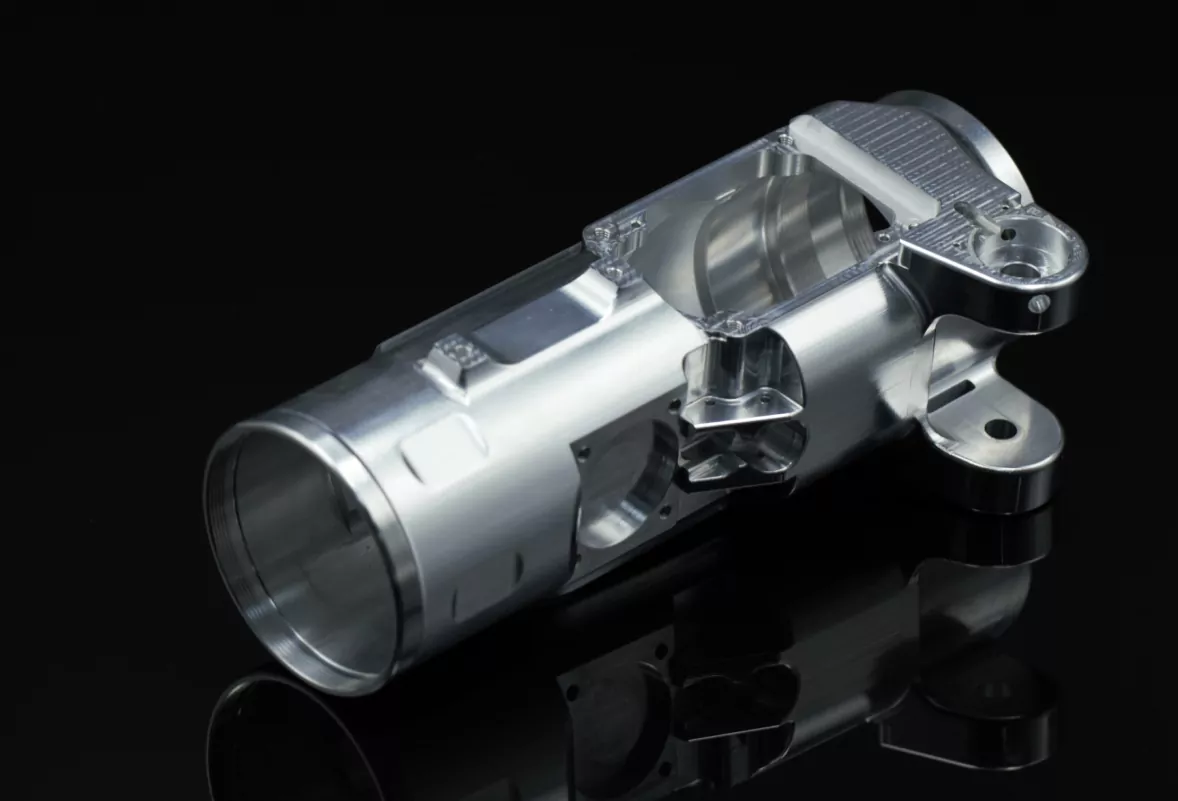
CNC, or computer numerical control machining, is a widely used manufacturing process that uses automated, high-speed cutting tools to remove material from a metal or plastic workpiece until the desired geometry is achieved. Standard CNC machines include 3-axis, 4-axis, and 5-axis milling machines, lathes, and routers. Machines may vary in how CNC parts are cut—the workpiece may remain in place while the tool moves, the tool may remain in place while the workpiece is rotated and moved, or both the cutting tool and workpiece may move together
When a machinists receive the CAD (computer-aided design) model which is also called 3D file, they will start from programing tool paths based on the 3D file. A skilled machinist knows how to optimize the tool paths to lower CNC machining cost as well as to achieve tight tolerance. CNC machines can cut almost any material such as metal alloys, plastics, wood, stones, ceramics and more. Making custom machined parts needed for nearly every industry, including automotive, robotics, medical, aerospace, electronics and industrial. 3ERP provides CNC machining services and offers custom CNC quotes on various of materials ranging from commodity aluminum, steel, stainless steel, ABS, acetal to advanced titanium, Inconel, and engineered plastics like Teflon, PPS, PEI and PEEK.


Our CNC Machining
Capabilities

CNC Milling Service
With 32 sets of 5-axis CNC milling machines in-house which allows us to mill tight tolerance plastic and metal parts with complex geometries easily. And we also offer low-cost machined parts by using our 3-, 4-axis milling machines.

CNC Turning Service
CNC turning is a more efficient method to manufacture round components from plastic and metal bars or tubes, such as worm shafts. When combined with live tooling, milled geometries can be achieved simultaneously.

EDM & Wire-Cut Service
EDM and wire-cut is one of the CNC machining processes which uses copper, graphite pattern or molybdenum wire to achieve the design for sharp corners, undercuts and remove whatever un-needed material from workpieces. EDM is also widely used for rapid tooling and production mold making.

CNC Grinding Service
If you need a super flat surface part, or round part that needs OD and ID +/- 0.005mm in tolerances, our CNC grinding machining service will be the best match of your production needs for such type of parts.

Swiss Machining Service
Swiss machining is an efficient way to produce complex, or slender component. By moving both live tooling and the workpiece, we can always cut the material which is close to the workpiece holder. To avoid deformation compared to traditional CNC lathe.

CNC Routing Service
Besides standard milling service for parts in engineering plastics or metals, we also offer CNC routing service for prototypes and parts in soft materials such as EPS foam, EVA, woods.

MACHINES

CERTIFIED

made MONTHLY

METAL MATERIALS
CNC Machined Part Gallery


CNC Machining Tolerances, Materials & Surface Finishes

Tolerances and Standards

Machinable Materials

Surface Finishes
From Concept to Production
CNC machining is an ideal manufacturing process whether you need a few parts or 10000+ units as end-used production parts. Here are the custom CNC services available at 3ERP.

Prototype Machining
From 3ERP, you can get your CNC machined prototypes done in days, super shot lead times allows you to verify the design fast.
- Instant quotes
- Instant DFM feedback
- Excellent quality
- Short lead time

Low-Volume Machining
CNC machining is a cost-efficient way to make certain types of parts in small volume or medium quantity. For example, 100 pieces to 1000 pieces.
- Lower cost
- Production-level quality
- Short lead time
- Test out the market before investment

Production Machining
Using CNC machines and robots is a best option for big volume production machining which allows us to avoid heavy labor. Decrease the cost significantly.
- Experienced engineers for DFM optimization
- A professional project manager working in your time zone
- First Article Inspection
- Guaranteed consistent quality
into production today
Advantages and Challenges of CNC Machining

CNC Machining for Various Industrial Applications

Automotive
Large size parts such as CNC machined ABS bumpers, PC/ABS dashboards and precise automotive components like reflectors, lenses, steering wheel components, engine, transmission.

Robotics and Automations
Manipulator parts, actuators, end effectors, motors, automatic control equipment, clamps, and housings for the robotics & automation industry.

Medical
Components for medical needs such as stainless steel or titanium bone plate, prostheses, respiratory devices, handheld devices, diagnosis equipment, anatomical models, and surgical instruments.

Aerospace
Aerospace engines, fuselages, turbines, brakes, tire parts, lighting system, vacuum pumps, and fuel pumps parts.

Consumer Products
Consumer products such as electronics device housings, buttons, handles, knobs, switches, wearable digital devices, cookware products, sporting equipment.

Energy
Energy industry components such as heat exchangers, valves, pipes, pumps & accessories, hydraulic components, battery components, solar panel parts, frames, and impellers.

Industrial Machinery
Electronic housings, conveyors, fasteners, connectors, generator components, fixtures, machine and tool parts for industrial machinery.

Education
Actual models can be created for education needs, experimental equipment such as engineering models,3ERP work with worldwide universities.