
Logo

4 Ways 3D Printing is Bringing Sustainable Materials to Construction

3dprinting-construction
Table Of Contents
Stay in the the loop
Subscribe To Our Newsletter

3D printing is offering solutions that are quicker, more affordable, and better for the planet. Known also as additive manufacturing, this technology is gaining momentum across the globe. Experts predict that the 3D printing construction market might climb from $1.4 billion in 2021 to an astounding $700 billion by 2031.

Why is this technology catching on so quickly? It tackles some of the biggest headaches in construction: labor shortages, soaring expenses, inefficiencies, and excessive waste. By constructing layer by precise layer, 3D printing cuts down on the need for traditional building methods, speeding up the construction process and enhancing its efficiency. Governments around the world are getting on board, with ambitious goals to have a quarter of new buildings constructed using 3D printing by 2030.

In this article, we’ll focus on how 3D printing is set to transform the construction landscape, making building faster and more resource-efficient while opening up new possibilities in architectural design.

Global Market Outlook for 3D Printing in Construction

5 Min

The construction 3D printing market is witnessing exponential growth, fueled by advancements in printing technologies and wider adoption across developed and emerging economies. Market forecasts highlight significant investment from construction companies, contractors, and research institutions aiming to optimize 3D printing technology for scalable commercial projects.

Initial equipment costs remain a challenge, but the long-term benefits—such as reduced labor requirements, faster project completion, and minimized material waste—make 3D printing an attractive solution for the industry. Many organizations are collaborating with academic institutions to refine construction materials and techniques, improving efficiency and ensuring regulatory compliance.

Can 3D Printing Be Used for Construction?

Yes, 3D printing is currently utilized extensively for both on-site construction of homes, offices, and infrastructure, as well as for off-site fabrication of various components. This method has been demonstrated to complete structures within 24 hours, showcasing its feasibility and speed. The primary advantages of 3D printing in construction include accelerated project timelines, reduced labor needs, and minimal material waste. The technology has garnered interest from both the public and private sectors, with some initiatives successfully printing entire residential communities significantly faster than traditional methods. However, scaling the technology for wider application, navigating regulatory standards, and ensuring long-term durability remain as challenges.

History of 3D Printing in Construction

The evolution of 3D printing in the construction sector marks a significant technological leap, tracing back to experiments and theoretical concepts long before its commercial viability. In 1939, a pioneering experiment in the United States ventured into what can be seen as an early form of concrete-based additive manufacturing, setting a precedent for future innovations.

From 1950 to 1995, concepts such as robotic bricklaying and automated construction began to surface. These early ideas laid the groundwork for advanced methodologies in additive manufacturing, particularly the use of pumped concrete and isocyanate foams, which would later play crucial roles in 3D construction printing.

The period between 1995 and 2000 witnessed significant advancements with the emergence of contour crafting. This technique used automated tools to layer cementitious and ceramic pastes, seamlessly integrating utilities like plumbing and electrical systems within the building structures at a laboratory scale, showcasing the potential for in-situ construction automation.

By the early 2000s, university research groups across the globe had begun to scale 3D printing technologies, adapting them for more extensive architectural and structural applications. Progress in this era laid the foundation for more sophisticated applications of 3D printing in the construction industry.

Between the late 2000s and 2010, techniques such as powder jetting and bonding, along with large-scale concrete deposition, moved from experimental to practical applications. These methods enabled the creation of entire structural elements like walls and façades through additive processes.

From 2015 onward, the real-world application of 3D printing in construction saw an exponential increase. Multiple demonstrations across various countries showcased the construction of small houses, office buildings, and even bridges using 3D printing technologies. Notably, in 1997, an engineering institute made a significant breakthrough by applying additive manufacturing techniques to concrete, which catalyzed the modern era of 3D concrete printing.

By 2014, the capabilities of 3D printing had become well-known globally after a construction team successfully printed several small houses in less than a day, demonstrating the rapid construction capabilities of 3D printing. The first fully on-site printed house appeared around 2017, marking a shift from off-site to on-site manufacturing methods. In 2019, Europe witnessed the introduction of its first on-site 3D-printed house, prompting further interest and regulatory considerations around this innovative technology.

What are the Benefits of 3D Printing for Construction?

What are the Benefits of 3D Printing for Construction

3D printing in construction offers numerous benefits that address both traditional challenges and modern demands of the building industry:

  • Significant Reduction in Construction Time: Projects can be completed up to 70% faster than traditional methods, revolutionizing project timelines and delivery.
  • Less Material Waste: Studies indicate that 3D printing reduces material consumption by 30–60%, contributing to more sustainable construction practices.
  • Lower Labor Costs: The automation involved in 3D printing can save up to 80% in labor costs, depending on the project scope, by reducing the need for manual labor.
  • Greater Design Freedom: 3D printing allows for the creation of complex architectural forms that would otherwise be costly or impossible to achieve with conventional construction methods.
  • Improved Worker Safety: By automating dangerous tasks, 3D printing significantly reduces the risk of accidents on construction sites.
  • Better Environmental Impact: Optimized material usage and the potential to use local resources help in reducing the overall carbon footprint of construction projects.
  • Rapid Prototyping and Design Changes: The flexibility of 3D printing technology allows for quick iterations and modifications during the construction process, enhancing the ability to adapt to client needs or design developments swiftly.

How Fast is 3D Printing Construction?

The speed of 3D printing in construction varies significantly based on the technology and scale of the project. Small houses can be printed in as little as 24 hours, while larger, more complex structures may take several days to weeks. Factors influencing the speed include the type of printer, the thickness of the layers, and the complexity of the design. The ability of 3D printers to operate continuously and automated systems that can run overnight drastically reduce construction timelines. These technologies not only expedite the construction process but also allow for rapid deployment in scenarios such as disaster relief, where time is a critical factor. Additionally, the efficiency of 3D printing can significantly reduce the overall project costs by minimizing material waste and labor expenses.

How Does 3D Printing Affect Labor in the Construction Industry?

3D printing technology is transforming labor dynamics in the construction industry by automating the most labor-intensive tasks. This shift reduces the reliance on skilled labor for repetitive tasks such as formwork and masonry, potentially decreasing onsite manpower dramatically. It creates new roles for operators, technicians, and material specialists who manage the digital aspects of 3D printing. Furthermore, the need for upskilling or reskilling the workforce to handle advanced printing equipment is becoming evident, as traditional construction skills are augmented with digital competencies.

Training programs for operating 3D construction printers are becoming more streamlined, often requiring only a few weeks thanks to user-friendly interfaces. This shift not only makes the technology accessible but also attracts a younger workforce interested in the technological and innovative aspects of construction. By reducing high-risk jobs and enhancing the technical skills of the construction workforce, 3D printing is setting a new standard for both efficiency and safety.

Is 3D Printing in Construction Sustainable?

Is 3D Printing in Construction Sustainable

3D printing in construction not only revolutionizes how buildings are constructed but also significantly enhances sustainability in the building process. Here are the key points on sustainability offered by this technology:

  • Decreases Raw Material Usage: 3D printers precisely deposit only the amount of material needed, reducing the overuse of resources and promoting conservation.
  • Minimizes Construction Site Waste: The technology significantly reduces leftover materials and formwork disposal, streamlining site operations and decreasing waste.
  • Uses Recycled or Local Natural Materials: The potential to use locally sourced or recycled materials lowers the environmental impact and supports local economies.
  • Lowers Transportation Demands: Employing locally sourced materials reduces the need for long-distance transportation, further decreasing the carbon footprint.
  • Incorporates Geopolymers and Earth-Based Mixes: These materials can substantially reduce CO₂ emissions compared to traditional concrete, making the construction process greener.
  • Enables Integration of Passive Design Elements: During the printing process, it’s possible to incorporate design features that enhance energy efficiency, such as natural cooling or heating elements.
  • Repurposing of Agricultural Waste: Projects can incorporate agricultural byproducts like straw or husk into clay-based prints, which not only recycles waste but also adds insulation properties to the structures.
  • Ease of Disassembly and Repurposing: Unlike traditional construction, 3D-printed structures can be designed for easier disassembly and repurposing, extending the life cycle of the materials used and supporting a circular economy.

How is 3D Used in Construction?

3D printing is increasingly utilized in the construction industry, revolutionizing traditional building methodologies through its ability to construct both on-site at the project’s final location and off-site within controlled environments. This flexibility allows for the efficient production of structural elements such as walls, columns, and even more complex forms like decorative shapes and specialized infrastructure components including bridges and pedestrian walkways.

The technology employs various methods of deposition, including the extrusion of materials such as concrete, foam, or polymers, each selected based on the specific requirements of the project. These materials are part of a growing library tailored specifically for construction needs, enhancing both the versatility and efficiency of 3D printing in building applications.

Significantly, the application of 3D printing in construction is supported by advanced machinery, including robotic arms and gantry systems, which facilitate the precise deposition of building materials in successive layers. Furthermore, some of the most advanced setups integrate additional materials like reinforcements or insulation during the printing process to ensure enhanced structural integrity and energy efficiency of the built structures.

How Does 3D Printing Technology Work in the Construction Industry?

3D printing within the construction sector is predicated on the use of a digital model from Computer-Aided Design (CAD) or Building Information Modeling (BIM) systems. These models guide automated equipment that meticulously extrudes or bonds materials layer by layer to form structural components.

Printers used in construction are often mounted on large gantry frames or operated via robotic arms, allowing the technology to accommodate the scale of building projects. Key to the process is the preparation of a specialized material blend suited to the specific demands of the construction, followed by careful calibration of the print path to ensure accuracy.

The process involves critical control over factors such as nozzle speed, layer thickness, and the curing times of materials, which are essential to prevent the collapse of structures during printing. The technology not only facilitates rapid prototyping and iterative design but also significantly reduces manual labor by automating much of the construction process.

What are the Main Stages of the 3D Printing Process in the Construction Industry?

The 3D printing process in construction can be delineated into several key stages:

  • Designing the 3D Model: Architects and engineers prepare digital blueprints that account for all architectural and structural requirements, including the placement of reinforcements and necessary openings for doors and windows.
  • Material Selection and Preparation: A variety of materials, such as concrete-based mixes, geopolymers, or other specialized substances, are chosen based on their flow properties, buildability, and setting times to suit specific project needs.
  • Printing Process: The primary method employed is often extrusion, but other techniques like powder bonding or spray-based approaches are also used depending on the complexity and requirements of the project.
  • Post-Processing and Finishing Touches: After printing, surfaces may be smoothed or milled, additional reinforcements or wiring installed if not embedded during printing, and protective coatings or insulation applied to enhance the durability and functionality of the structure.

What are the Different Methods of 3D Printing in Construction?

In construction, 3D printing technologies are playing a pivotal role. Each method offers unique advantages and is chosen based on the specific requirements of the construction project. Here are some of the most prevalent methods used in construction 3D printing:

Extrusion-based 3D Printing

This method utilizes nozzles to deposit continuous layers of material such as concrete, polymers, or foam. The process often involves sophisticated equipment like robotic arms or gantry systems to handle the material extrusion over large areas.

Extrusion-based 3D printing is particularly effective for creating large-scale structural components like walls directly on the construction site. It is also well-suited for crafting unique, curved architectural forms that are difficult to make with traditional construction methods.

Pros:

  • High adaptability to various materials
  • Capable of constructing large structures efficiently with minimal material waste

Cons:

  • Requires careful control over the material’s rheology to ensure good layer adhesion and structural integrity
  • The height and size of printed structures can be limited by the technology’s current capabilities

Powder Bed Fusion

Powder bed fusion involves spreading layers of powder material, such as cement or sand, which are then selectively fused together by either a laser or a binding agent to form the object layer by layer.

This technique is primarily used off-site to produce highly detailed and complex architectural elements or components that require precise dimensional accuracy.

Pros:

  • Exceptional detail and accuracy in the final product
  • Allows for complex geometrical designs with minimal waste, as unused powder can be recycled

Cons:

  • Generally limited to smaller construction volumes compared to other methods
  • High costs and slower speeds for larger projects due to the intricacies involved in the laser or binder application

Binder Jetting

Binder jetting technology in construction involves depositing a liquid binder onto a bed of powder material, such as sand or cement. Each layer is bonded by the binder, after which a new layer of powder is applied, and the process repeats until the part is completed.

This method is particularly effective for producing high-detail architectural elements or intricate modular panels off-site. It allows for the creation of complex shapes that would be difficult to achieve with traditional construction techniques.

Pros:

  • High precision and capability to reproduce intricate details.
  • Efficient use of materials, as excess powder can be recycled for future prints.

Cons:

  • Parts often require post-processing treatments like curing or infiltration to enhance their mechanical properties.
  • The scale of printers and the cost can be prohibitive for larger construction applications.

Material Jetting

Material jetting works similarly to traditional inkjet printing but uses construction materials instead. It jets droplets of material that solidify, building the object layer by layer.

This method is adept at handling multiple materials within the same build, allowing for the creation of specialized architectural features with varied properties, including color and material type.

Pros:

  • Exceptional detail and precision.
  • Ability to incorporate different materials and colors in a single print.

Cons:

  • Generally slower compared to other 3D printing methods, making it less suitable for larger structures.
  • Higher costs and operational complexities limit its use to smaller, more detailed components.

Additive Welding

Additive welding employs a welding nozzle to lay down layers of molten metal, often supported by robotic arms for enhanced precision and flexibility.

This method is used to fabricate metal components such as structural frames or bespoke artistic elements within construction projects.

Pros:

  • Suitable for creating free-form metal structures with high durability.
  • Offers significant freedom in design, allowing for non-planar and complex geometries.

Cons:

  • Demands high levels of expertise and strict quality control to ensure the integrity of the structure.
  • Energy-intensive process requiring significant resources.

Contour Crafting

Contour crafting in construction 3D printing utilizes automated troweling or shaping along the edges of each layer. This method creates buildings with smooth exterior surfaces, enhancing the aesthetic and structural integrity of the printed structures.

It’s primarily used for constructing large-scale structures like walls and building shells, especially where smooth finishes are desirable.

Pros:

  • Enables the integration of structural reinforcements and utility conduits directly into the walls during the printing process.
  • Produces walls with ready-to-finish surfaces, reducing the need for additional plastering or surface treatment.

Cons:

  • The complexity of integrating internal details such as insulation or rebar during the printing process requires sophisticated control systems.
  • Adapting to changes in design or interruptions in printing can be challenging due to the method’s reliance on continuous operation.

D-shape Printing

D-shape printing uses a large-scale powder bonding system where layers of sand or stone-based powder are selectively bonded using a binder, layer by layer.

This method is ideal for producing off-site detailed and customized architectural elements such as curved panels and intricate decorative features.

Pros:

  • Capable of producing components with high compressive strength, suitable for structural applications.
  • Allows for the creation of large-scale forms not feasible with traditional construction methods due to its layer-by-layer approach.

Cons:

  • Dependency on specialized binding agents which can be costly and require careful handling.
  • The size of the build area is typically limited to the dimensions of the printing setup.

Hybrid Methods

Hybrid methods in construction 3D printing combine different printing technologies, such as extrusion and powder bonding, to take advantage of each method’s strengths.

These methods are used to fabricate complex structures that require the integration of multiple materials within a single build, such as inserting metal components into concrete forms.

Pros:

  • Enhances design flexibility by allowing different materials to be combined for functional or aesthetic purposes.
  • Can incorporate advanced features like internal channels for utilities or structural reinforcements directly during the build process.

Cons:

  • Greater complexity in the printing process which may increase the likelihood of errors and extend the time required for production.
  • Higher costs associated with the management and operation of multiple printing systems.

What are the Different Types of 3D Printers Used in the Construction Industry?

In the construction industry, 3D printing has shaped how structures are built, offering various types of printers to suit different project needs. These printers vary primarily in their method of material handling, precision, scale capability, and the environments they are best suited for. Understanding the specific applications and limitations of each type is crucial for optimizing their use in construction projects.

Robotic Arm 3D Printers

Robotic arm 3D printers utilize highly flexible, multi-axis arms that allow for the printing of complex structures with curves and angles.

These printers are ideal for projects requiring intricate design details and complex geometries. They are versatile enough for use both on construction sites and in prefabrication facilities.

Pros:

  • High design freedom: Capable of executing designs that other printers may find challenging, such as overhangs, undercuts, and internal structures.
  • Integration capabilities: Can combine multiple materials and methods, such as extrusion and additive welding, in a single build process.

Cons:

  • Specialized operation: Requires operators with a higher level of training and expertise.
  • Limited reach: The build size is restricted by the arm’s reach unless additional setups like rails are used to extend its range.

Gantry-style 3D Printers

Gantry-style printers operate within a large frame that moves along fixed tracks, covering the X, Y, and Z axes, making them suitable for constructing sizable structures like walls or entire building shells.

These printers are most effective in large-scale construction projects where high volumes of material need to be precisely deposited over large areas.

Pros:

  • Scalability: Suitable for projects of large dimensions, able to construct full-sized buildings due to their expansive printing area.
  • Reliability: Provides consistent results with a lower likelihood of mechanical failure due to its robust and straightforward design.

Cons:

  • Space requirements: The size of the gantry dictates the minimum space needed, which can be substantial, limiting their use in areas where space is at a premium.
  • Mobility issues: Less flexible compared to smaller, more agile printers, requiring significant effort and time to relocate.

Mobile 3D Printers

Mobile 3D printers are engineered for dynamic movement across construction sites. These units typically operate on tracks or wheels, enabling them to maneuver over uneven terrain and print directly on-site without the constraints of a fixed installation.

These printers are essential for projects requiring rapid on-site fabrication of multiple structures or where construction occurs over a broad area, such as large housing developments or remote locations.

Pros:

  • Mobility: Easily moved to various parts of a construction site, allowing for multiple structures to be printed in sequence from a single setup.
  • Flexibility: Adapts quickly to changes in design or site conditions without significant downtime for reconfiguration.

Cons:

  • Alignment challenges: Keeping the printing process consistent while moving can be difficult, requiring advanced technology to maintain accuracy.
  • Complex control systems: Sophisticated software and hardware are needed to coordinate movements and printing operations effectively.

Powder-based 3D Printers

This type of printer uses a powder bed where a binder or laser fuses powder material layer by layer. The process is refined enough for detailed architectural elements and small-scale models.

It’s best suited for creating intricate designs or detailed architectural components that require high precision, often used in a controlled environment to ensure stability and accuracy.

Pros:

  • High resolution: Capable of producing parts with complex geometries and fine details.
  • Material efficiency: Excess powder can be reused, minimizing waste.

Cons:

  • Speed limitations: Generally slower compared to other methods, making it less viable for large-scale constructions.
  • Volume constraints: Not ideal for producing large components as each must fit within the machine’s powder bed.

Concrete Extrusion 3D Printers

Concrete Extrusion 3D PrintersThese printers extrude concrete or similar materials to construct robust structures layer by layer. They are among the most commonly seen styles of 3D printers on large construction sites.

Primarily used for building structural components such as walls and foundations directly on-site, these printers are capable of creating entire buildings from the ground up.

Pros:

  • Speed: Capable of printing large structures quickly compared to traditional construction methods.
  • Material efficiency: Reduces waste by using the exact amount of concrete needed without excess.

Cons:

  • Environmental conditions: Print quality can be influenced by external factors such as weather, requiring careful timing and conditions for use.
  • Operational complexity: Managing the concrete mix and print parameters requires precise control to ensure structural integrity.

Hybrid 3D Printers (Combining Multiple Techniques)

Hybrid 3D printers represent the forefront of construction printing technology by integrating multiple deposition methods. These advanced systems might combine extrusion, milling, and welding functionalities within a single machine setup.

Also, it’s ideal for projects that require a blend of strength, aesthetic detail, and structural complexity. These printers are particularly useful in constructing buildings where both the interior and exterior details are crucial.

Pros:

  • Versatility: Able to handle a variety of materials and processes to produce more complex structures.
  • Efficiency: Minimizes the need for separate machines by combining multiple fabrication techniques, reducing time and labor costs.

Cons:

  • Cost: Generally, more expensive due to the complexity of the technology and materials used.
  • Operational Complexity: Requires operators with advanced training and knowledge to manage the different systems effectively.

What are the Best 3D Printers for Construction?

Identifying the best 3D printers for construction involves understanding their operational capacities, cost-efficiency, and adaptability to different construction environments.

Here’s a table that outlines the best 3D printers for construction, focusing on their key specifications, features, and general price ranges.

Printer Type Build Volume Layer Resolution Printing Speeds Supported Materials Price Range Unique Features
Large-Scale Extruders Large enough for rooms or sections Medium to low Fast; suitable for rapid construction Concrete, geopolymers High Minimal material waste, rapid construction capability
Robotic Arm Printers Variable, depends on arm reach High Moderate Metals, polymers, concrete Very High High precision, adaptable to complex geometries
Gantry System Printers Several meters in all directions Low to medium Moderate to fast Concrete, large polymers Medium to High Stable and reliable for large-scale builds
Mobile Printers Smaller, targeted print areas Medium Slower compared to fixed systems Concrete, light polymers Medium High mobility for on-site adjustments
Powder-based Printers Confined to machine capacity High Slow Sand, cement powders, specialty binders High Excellent for detailed and complex designs

What Materials are Used in Construction 3D Printing?

In 3D printing, a variety of materials are tailored to meet specific structural demands and environmental considerations. These materials are chosen for their unique properties which enable the practical and innovative building of structures directly from digital models.

Concrete-Based Materials

Concrete remains a staple in construction 3D printing, favored for its robustness and adaptability. The typical formulation involves cement, fine aggregates, and specific additives that facilitate the extrusion process and expedite curing. This familiar material is not only readily available but also offers the high compressive strength essential for structural integrity. However, achieving the optimal water-to-cement ratio is critical; deviations can lead to compromised layer adhesion and potential cracking. On the financial side, although the cost of advanced concrete mixes can be substantial—running into hundreds of dollars per cubic yard—market expansion is expected to reduce expenses. In response to regulatory standards that have yet to catch up with this modern technique, some construction projects may overdesign their use of concrete to ensure compliance.

Geopolymer Materials

Geopolymers represent an innovative category in construction 3D printing, made primarily from aluminosilicate materials. These materials shine in sustainability metrics, offering significant reductions in CO2 emissions compared to traditional cement. They are not only heat resistant but also promote environmental stewardship within the construction industry. The production of geopolymers may involve specific curing conditions to achieve desired properties, and their raw materials’ availability could vary, potentially affecting project feasibility. Nonetheless, they are increasingly considered for large-scale infrastructure projects, especially where the integration of local industrial byproducts can further cut costs and carbon footprints.

Clay and Earth-Based Materials

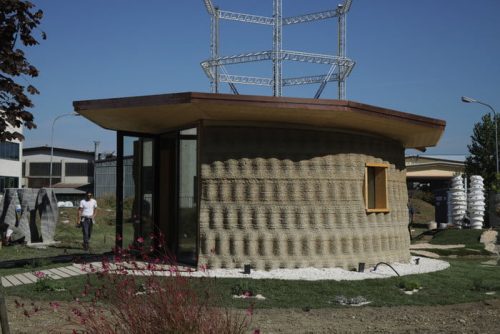
Clay and earth-based materials are traditional yet innovative choices in construction 3D printing. Utilized primarily for their sustainability and local availability, these materials are composed of natural soils, clays, or mud, often enhanced with organic or synthetic fibers to increase tensile strength. These materials are notably cost-effective and provide excellent insulation, making them ideal for eco-conscious construction projects. However, they do present challenges: structures built with these materials are generally lower in height due to their weight and slower drying times, and they require protection from moisture to maintain integrity. Notably, recent advancements have seen the successful 3D printing of entire homes using local soils, underlining the potential for reducing the environmental impact of construction. These materials are especially beneficial in regions prone to natural disasters or where traditional building supplies are limited, as they can be used with minimal processing and are often stabilized with modest amounts of cement to enhance their structural capabilities.

Thermoplastics

Thermoplastics like ABS (Acrylonitrile Butadiene Styrene) and PLA (Polylactic Acid) are also employed in construction 3D printing, particularly for creating detailed architectural features or complex formworks. These plastics are prized for their ability to form intricate shapes and fine details rapidly. Although not typically used for load-bearing structures, thermoplastics are excellent for non-structural components, offering flexibility in design and the potential for recycling. The main drawbacks include their unsuitability for primary structural applications and the higher costs associated with the plastic filaments. Nonetheless, for applications requiring aesthetic versatility or lightweight components, thermoplastics provide an effective solution. They are particularly useful in the prototyping phase of design, where rapid iteration and testing of ideas are required.

Metal Alloys

Metal alloys represent a more robust material choice in construction 3D printing, commonly applied through methods like additive welding or powder fusion. These materials are indispensable for creating structural elements that require high strength, such as metallic frames or specialized support components within larger constructions. Metals like steel and aluminum can be precisely deposited to form dense, durable structures capable of withstanding significant loads and stresses. However, the use of metal alloys in 3D printing is generally associated with high costs due to the expensive nature of the raw materials and the energy-intensive processes involved. Additionally, the implementation of metal 3D printing in construction requires advanced technical skills and strict adherence to safety standards, particularly in handling and welding. Despite these challenges, metal printing has been successfully used in significant projects, including the construction of bridges and other critical infrastructure, demonstrating its effectiveness and potential in modern building practices. Quality assurance is critical, often necessitating sophisticated inspection techniques such as ultrasonic testing or radiography to ensure the integrity of welds and the absence of structural defects.

Recycled Materials

In the drive towards sustainability, recycled materials have become increasingly prominent in construction 3D printing. These materials might include recycled plastic aggregates, reclaimed concrete, and various industrial byproducts. The primary advantages of using recycled materials are their lower environmental impact and potential cost savings. They help reduce landfill waste by repurposing debris and other discarded materials into valuable construction inputs.

However, the use of recycled materials is not without challenges. Ensuring the structural integrity of the printed objects requires rigorous testing, especially since the consistency and purity of recycled feedstocks can vary greatly. Furthermore, meeting strict structural codes is essential, which can be difficult with heterogeneous materials. Despite these limitations, innovative recycling technologies in 3D printing are proving capable of supporting sustainable construction practices, promoting a circular economy, and reducing the overall carbon footprint of building projects.

Composite Materials

Composite materials in construction 3D printing blend different fibers like glass, carbon, or basalt with cementitious bases or polymer matrices. These composites are engineered to capitalize on the beneficial properties of each component material, offering enhanced tensile strength, flexibility, and a lighter weight than traditional construction materials. This makes them particularly valuable for applications requiring robust yet lightweight structural elements.

The benefits of composite materials include their adaptability to complex shapes and their ability to perform under various environmental conditions. However, their use involves higher costs due to the complex manufacturing processes and the need for specialized 3D printers capable of handling multi-phase materials. Despite these costs, the investment in composite materials can be justified by their long-term durability and performance, particularly in innovative architectural projects or in applications where traditional materials might fail.

Foam and Insulation Materials

Foam and insulation materials represent a unique category in construction 3D printing, primarily used for non-structural purposes such as thermal insulation or intricate formworks. These materials are often applied using a spray-based deposition process, which allows for the creation of lightweight, insulative structures that can be easily shaped and then hardened.

The primary advantage of using foam and insulation materials lies in their excellent thermal properties and reduced structural weight, which can significantly enhance the energy efficiency of buildings. However, they must comply with rigorous fire safety standards to be used in inhabited structures. Some innovative applications of foam materials in 3D printing include serving as temporary molds for concrete or as permanent insulation layers that remain part of the structure. The ongoing development of fire-resistant foam formulations is expanding the use of these materials in more diverse construction settings, offering new possibilities for energy-efficient building designs.

What are the Applications of 3D Printing in Construction?

The applications of 3D printing in construction are diverse and innovative, paving the way for more efficient building techniques and new architectural possibilities. From small fixtures to entire buildings, 3D printing is making a significant impact on how construction projects are conceived, planned, and executed.

Here’s a closer look at some of the specific applications of 3D printing in the construction industry.

Building Types

3D printing technology is increasingly being utilized to construct a variety of building types, each benefiting from the unique capabilities of this technology. Here are some examples:

  • Residential Houses: Both single-story and multi-story homes are being printed using 3D technology, which can produce walls and structural frames rapidly. This method is not only faster but also reduces material waste.
  • Commercial Buildings: Office spaces and retail locations are also benefiting from 3D printing, which allows for the customization of design elements and integration of complex infrastructure needs seamlessly.
  • Rapid Shelters: For disaster relief or remote area development, 3D printing offers a quick and cost-effective solution to housing. These shelters can be designed to fit the specific environmental and cultural needs of the area.

Infrastructure Projects

In civil engineering, 3D printing is also making strides, particularly in the creation of infrastructure components. Here are several key applications:

  • Bridges: Pedestrian and vehicular bridges are being constructed with 3D printers, using both metal and concrete materials. These structures are often more artistic and can be produced with fewer materials and labor than traditional methods.
  • Road Barriers and Culverts: 3D printing is ideal for producing road barriers and culverts with precise specifications, contributing to safer and more durable roadways.
  • Reinforced Elements for Highways or Rail Lines: The technology is capable of printing large, reinforced structures that meet the rigorous demands of highway and railway constructions.

Specialized Projects

3D printing has opened up new frontiers in construction, allowing for the creation of structures and projects that were once considered too complex or too costly. Examples of specialized projects include:

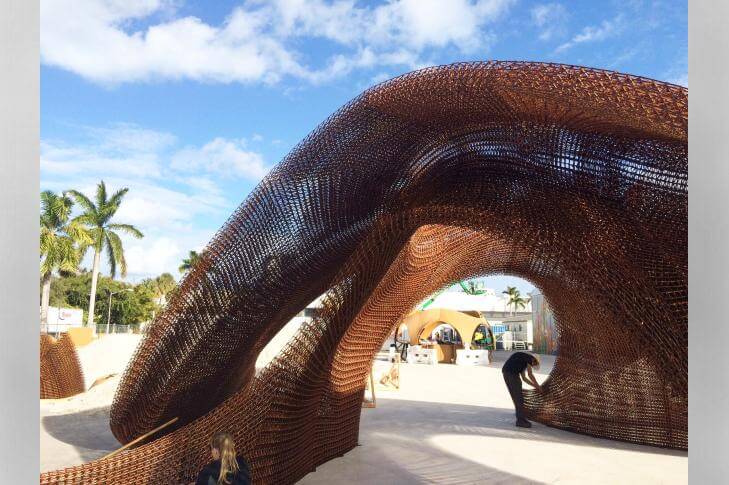
  • Large-scale Sculptures and Architectural Facades: The technology enables the construction of intricate designs and massive structures that traditional methods would struggle to accomplish.
  • Urban Furniture: Items such as benches and decorative fixtures are now being printed, offering unique design possibilities and rapid deployment for urban development.
  • Aquatic or Reef Structures: These are used for environmental restoration, helping to rebuild coral reefs and other aquatic habitats with tailored designs that promote marine life growth.

Design and Aesthetics

3D printing excels in merging functionality with aesthetic design, allowing architects and designers to experiment with shapes and forms that were previously unachievable. Key areas include:

  • Customized Decorative Elements: Intricate lattice walls and unique geometric patterns can be printed to specification, adding a unique touch to any building.
  • Artistic Installations: These installations blend functional elements with visual appeal, making bold architectural statements.

Renovation and Preservation

3D printing also plays a crucial role in the renovation and preservation of historical buildings. By using this technology, restoration projects can achieve:

  • Recreation of Ornate Historical Details: 3D printing can accurately replicate intricate patterns and components that are otherwise too delicate or damaged to restore by hand.
  • Custom Molds for Heritage Facades: These are used to precisely restore the external features of historic buildings.

Research and Development

In the realm of construction, 3D printing is not just about creating structures—it’s about pushing the boundaries of what is possible. Universities and research institutions are at the forefront, exploring:

  • Innovative Materials: Developing new composite materials that offer greater durability and sustainability.
  • Robotic Construction: Integrating advanced robotics with 3D printing to automate and optimize the construction process.
  • Hybrid Solutions: Combining traditional construction methods with 3D printing to achieve structures that are both aesthetically pleasing and structurally sound.

Sustainability and Innovation

3D printing is pivotal in driving sustainability in the construction industry. It enables the use of local and eco-friendly materials and reduces the overall carbon footprint of construction activities. Key sustainable practices include:

  • Eco-Friendly Housing: Utilizing local earth-based materials like mud or clay, which are abundant and minimally processed.
  • Low-Waste Production: Significantly reducing on-site waste thanks to precise material usage and recycling capabilities.
  • Space Construction: Innovating with projects like lunar or Martian bases, where materials from the celestial body itself can be used, minimizing the environmental impact on Earth.

What are the Challenges of 3D Printing in Construction?

What are the Challenges of 3D Printing in Construction

The integration of 3D printing in construction heralds a significant shift in how structures are conceptualized, designed, and built. However, this innovative technology faces several challenges that must be addressed to maximize its potential:

  • Regulatory Hurdles: The construction industry is highly regulated, and 3D printing introduces complexities that current building codes and regulations may not adequately address. The lack of specific guidelines for 3D printed structures can lead to uncertainties in compliance and approval processes.
  • High Initial Costs: The upfront investment for 3D printing technology, including machinery and maintenance, is substantial. While long-term savings on labor and materials are possible, the initial financial barrier can be prohibitive for many firms.
  • Material Limitations: The materials used in 3D printing, such as concrete mixtures, require precise formulation to ensure they flow correctly yet set quickly enough to support layers above. Optimizing these materials for consistency and performance remains a significant technical challenge.
  • Structural Integrity: Ensuring the long-term durability and structural integrity of buildings constructed with 3D printing techniques poses another challenge. The layered nature of the process can lead to weaknesses if not properly managed.
  • Workforce Skills: There is a steep learning curve associated with operating 3D printing equipment and designing for 3D construction. The need for skilled professionals in digital modeling, printer operation, and advanced material sciences is growing.
  • Environmental and Operational Conditions: 3D printing operations are sensitive to environmental conditions. Variabilities in temperature and humidity can affect the curing times and final properties of printed materials.
  • Scalability Issues: Scaling 3D printing for large or multi-level projects introduces complexities in structural stability and logistics. Ensuring consistent quality across a large build area remains a logistical and technical challenge.

What are the Key Design Tips for 3D Printing Construction Projects?

Effective design is critical in maximizing the benefits of 3D printing in construction. Here are some key design tips to consider when planning a 3D printing construction project:

  • Efficiency in Design: Opt for simpler geometries that are easier and more cost-effective to print. However, do not shy away from utilizing the unique capability of 3D printers to create intricate designs if they provide substantial benefits.
  • Integrate Functional Elements Early: Plan for necessary openings for doors, windows, and utilities from the outset to avoid costly modifications later. Integrating these elements during the design phase helps in reducing post-processing work.
  • Material Testing: Conduct thorough testing of material flow and layer adhesion properties early in the design process. This ensures the structural stability and integrity of the print.
  • Reinforcement Strategies: Consider how reinforcements, such as steel bars or fibers, can be incorporated during the printing process or afterwards to enhance structural integrity.
  • Modular Design Considerations: If components are printed off-site, design for ease of assembly with precise joint details and connections that facilitate easy and secure assembly on-site.

How Much Do Construction 3D Printers Cost?

The financial outlay for construction of 3D printers varies significantly based on the scale and capability of the machinery. Entry-level models suited for smaller or experimental projects typically start around $100,000. In contrast, advanced systems designed for large-scale construction tasks, including multi-story buildings, can command prices upwards of $500,000. The broader the build capacity and the more sophisticated the technology, such as laser-based powder fusion, the higher the cost.

Factors influencing the cost of these printers include:

  • Printer Size and Build Volume: Larger printers with extensive build capacities naturally cost more due to the increased material and technological requirements.
  • Material Handling Capabilities: Printers that can process specialized materials like geopolymers or those equipped with advanced extrusion systems are more expensive.
  • Design Complexity: Printers that offer high precision or the ability to produce complex architectural features also carry a premium.

What are the Regulatory and Legal Challenges of 3D Printing in Construction?

The regulatory landscape for 3D-printed construction is still in a phase of adaptation and evolution, which presents several challenges:

  • Building Codes: Current building regulations often do not accommodate the unique aspects of 3D printing, such as layered deposition and the use of novel material mixes. This gap can lead to hurdles in obtaining building permits and passing inspections.
  • Permitting Delays: The absence of clear guidelines for 3D-printed buildings can result in prolonged project approval times. Local authorities might be hesitant to green-light construction projects using this technology due to uncertainties around structural integrity and fire safety.
  • Standards for Testing and Quality: There is a critical need for industry-wide standards that specify testing methods for materials like compressive strength and layer adhesion to ensure reliability and safety of 3D-printed structures.
  • Liability and Insurance Issues: Determining liability for structural failures or defects can be complicated, with questions around whether responsibility lies with the material suppliers, printer manufacturers, or construction firms.
  • Government and Regulatory Support: While some local governments are proactive in supporting 3D printing for its potential in sustainable and rapid construction, others lag behind, which can stifle innovation and adoption.

What are the Global Trends in Construction 3D Printing?

With advancements in technology and materials, 3D printing is gaining momentum, offering significant benefits in terms of cost, speed, and environmental impact. Each region has adopted this technology in unique ways, reflecting local needs, economic conditions, and regulatory environments.

America

In America, early adoption of 3D printing technologies is evident across a range of projects from residential homes to office buildings and even military infrastructures. The technology is particularly noted for its ability to produce affordable housing rapidly, a critical advantage in regions facing housing shortages. Additionally, there is a continued drive towards automation as a solution to the persistent labor shortages affecting the construction industry.

Europe

Europe’s engagement with 3D printing in construction is heavily characterized by a strong research orientation. Countries across the continent are investing in sustainable and advanced building technologies, with numerous demonstrations from 3D-printed bridges to multi-story buildings making headlines. The collaboration between universities and the construction industry is pivotal in Europe, fostering innovation in new materials and structural testing that push the boundaries of what can be achieved with 3D printing.

Asia and the Middle East

In Asia and the Middle East, the rapid pace of construction demands innovative solutions, making 3D printing a valuable tool for large-scale infrastructure projects. Some regions have set ambitious targets to incorporate 3D printing in a significant percentage of new buildings by 2030. The technology is not just limited to smaller projects but extends to entire office buildings, multi-unit housing, and complex bridges, showcasing its scalability and efficiency.

Comparing 3D Printing to Traditional Construction Methods

The shift from traditional construction methods to 3D printing is reshaping the building industry. Here’s a comparison highlighting key differences:

  • Costs
    • Traditional: High labor costs, significant expenses for formwork and materials.
    • 3D Printing: Greater initial investment in equipment; however, it offers savings on labor and reduces material waste over time.
  • Time
    • Traditional: Completion times can span months to years, heavily dependent on project complexity and workforce efficiency.
    • 3D Printing: Can accelerate construction by up to 70%, drastically reducing the time needed to erect core structures.
  • Environmental Impact
    • Traditional: Generates substantial waste due to excess materials; relies on heavy machinery which increases the carbon footprint.
    • 3D Printing: Enhances material efficiency and typically uses less energy, contributing to a lower overall carbon footprint. Utilization of local materials can further reduce environmental impact.
  • Scalability
    • Traditional: Proven effectiveness for large and complex projects, though often hampered by logistical inefficiencies.
    • 3D Printing: Continually advancing in capability, with innovations in print materials and methods allowing for larger and more complex architectural forms.

Can 3D Printing Be Combined With Other Construction Technologies?

3D printing’s versatility allows it to be integrated with various cutting-edge construction technologies, enhancing efficiency and expanding capabilities:

  • Building Information Modeling (BIM): Direct integration of 3D printing with BIM enables precise translations of digital models into physical structures, ensuring high accuracy in material deposition.
  • Robotics: Robotic arms can be synchronized with 3D printers to perform intricate tasks like rebar placement or integration of building utilities during the print process, which enhances structural integrity and functionality.
  • Prefabrication: Components such as panels or architectural details can be prefabricated using 3D printers in a controlled factory setting and then assembled on site, significantly speeding up the construction process.
  • IoT and Sensors: Implementing IoT devices and sensors in 3D printing setups allows for real-time monitoring of the printing process, such as layer adhesion and curing times, ensuring each phase meets quality standards.

What Is the Future of 3D Printing in Construction?

The horizon for 3D printing in construction promises a transformative shift, leveraging cutting-edge technologies to redefine how buildings are created. The evolution of this field suggests several developments poised to mainstream within the construction sector:

  1. Material Innovation: The future will likely see the advent of new, more sustainable materials such as zero-cement binders and bio-based alternatives. These innovations aim to drastically reduce carbon emissions and enhance the environmental sustainability of construction practices.
  2. Autonomous Construction: The introduction of autonomous mobile printers will facilitate the construction of large-scale projects more efficiently. These autonomous systems could be deployed to build infrastructure projects and emergency shelters swiftly, addressing urgent housing needs without the requirement for extensive human labor.
  3. Extraterrestrial Building: As space exploration advances, so too does the potential for off-Earth construction. Research is currently focused on utilizing local resources on the Moon or Mars to create habitable structures, which would significantly reduce the cost and complexity of space colonization.
  4. Scalability and Complexity: The technology is set to handle larger, multi-story buildings due to advancements in layering technology and printing processes. Regulatory frameworks are also expected to evolve to better accommodate these innovations, allowing for more complex architectural projects to be realized.
  5. Robotic Integration: Future 3D construction sites might employ synchronized robotic arms, working in concert to print large structures quickly and efficiently. This would not only speed up the construction process but also allow for the integration of various building elements such as insulation and reinforcement directly into the print process.
  6. Advanced Robotics and Sensing Technologies: With non-planar and multi-axis deposition capabilities, robotics will expand the possible geometrical complexities of printed structures. Integrated sensors could adjust printing techniques in real-time, optimizing material properties and structural integrity as environmental conditions change.
  7. Swarm Printing: Looking ahead, the development of coordinated printing involving multiple robots could facilitate the construction of large complexes, revolutionizing the scale at which 3D printing can be applied in urban development.

Conclusion

3D printing is creating a significant impact in the construction industry by solving long-standing problems like high labor costs, slow project completion, and significant environmental impact. This innovative technology brings with it the promise of faster building times, significantly reduced waste, and the ability to create designs that were once thought impossible.

As we continue to refine the technology and expand training programs, more professionals will learn how to effectively use 3D printing. We’ve already seen inspiring examples around the world where 3D printing has sped up construction, cut down on costs, and lessened the carbon footprint of building projects.

Looking forward, the integration of 3D printing in construction is only going to deepen. This means better efficiency and more creative freedom in building designs. With each advancement in regulatory frameworks and technology, we are stepping closer to a future where 3D printing is at the heart of construction.

Frequently Asked Questions

Can I Build A House With A 3D Printer?

Yes, it is entirely feasible to build a house using a 3D printer. Demonstrations across the globe have successfully constructed homes by layering materials such as concrete. While the main structure can be erected in less than a day, additional elements like roofing and windows are typically completed using conventional construction methods. This technology not only expedites building processes but also significantly cuts down on labor and material costs..

How Does 3D Printing Address Housing Shortages?

3D printing significantly addresses housing shortages by enabling faster construction of affordable homes with considerably lower labor requirements. This method reduces overall material waste, which not only cuts costs but also enhances the affordability of housing projects, particularly in budget-constrained regions. Effective deployment of this technology has been demonstrated in several areas experiencing severe housing shortages, delivering cost-effective, safe, and rapidly built housing solutions.

Share this blog
By clicking "Accept", you agree to the storing of cookies on your device to enhance site navigation, analyze site usage, and improve marketing. we never collect any personal data.