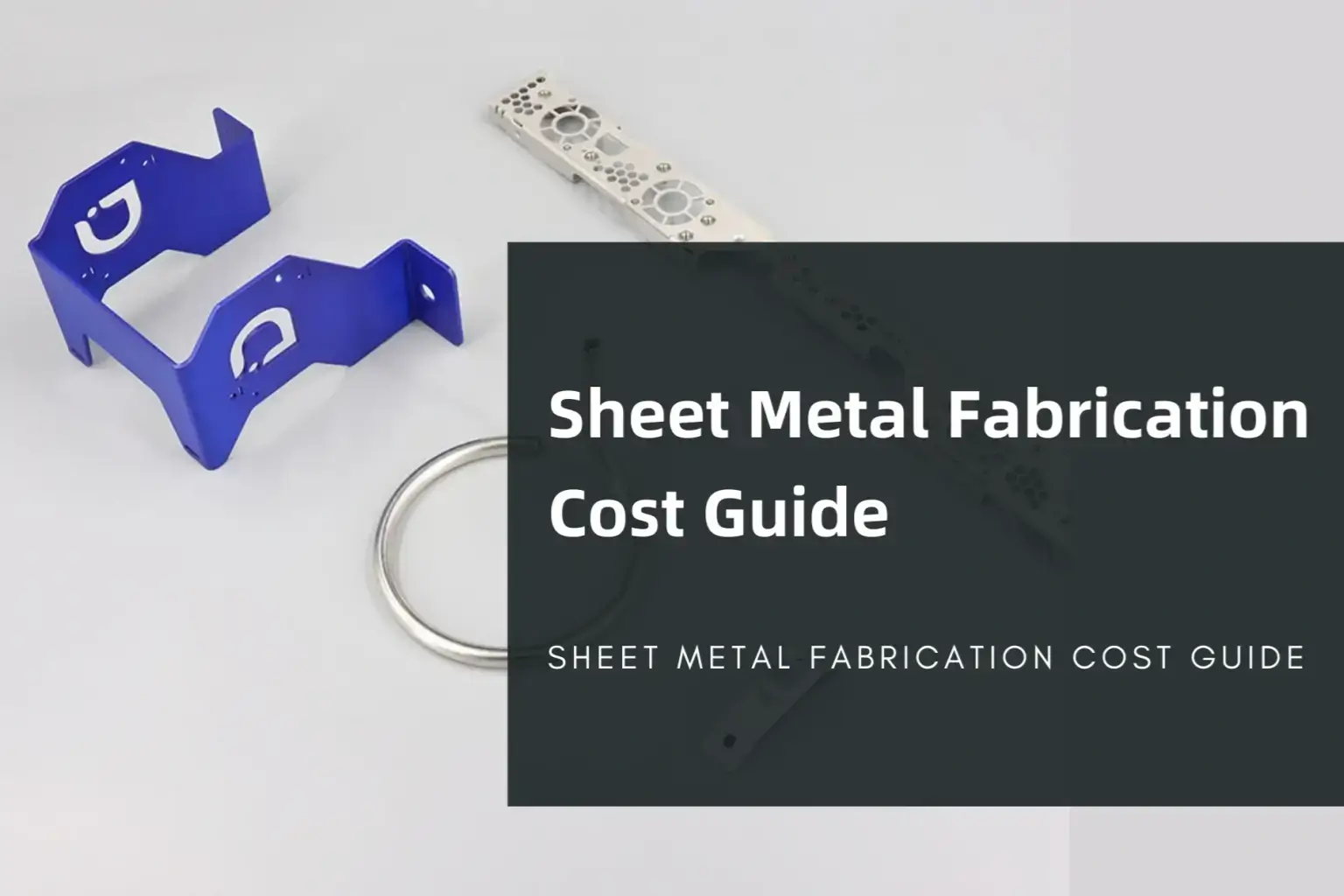


Sheet metal fabrication is an important area of prototyping and on-demand manufacturing. In its standard gauges, sheet metal can be easily cut, deformed, and assembled, resulting in low sheet metal fabrication costs for many orders.
That being said, sheet metal fabrication prices vary depending on the type of metal, the gauge or thickness, and the individual operations required to make the parts. And because of the different types of operations required for sheet metal fabrication, providing a cost estimate for industrial sheet metal fabrication is often more complex than quoting a part to be made using a CNC machining center, for example.
This article examines the cost of sheet metal fabrication, from raw material to manufacturing to post-processing.
How Much Does Sheet Metal Fabrication Cost?
Before getting into the most important sheet metal fabrication price considerations, we should recap what sheet metal fabrication is, and why the broadness of this term can lead to wide cost variations.
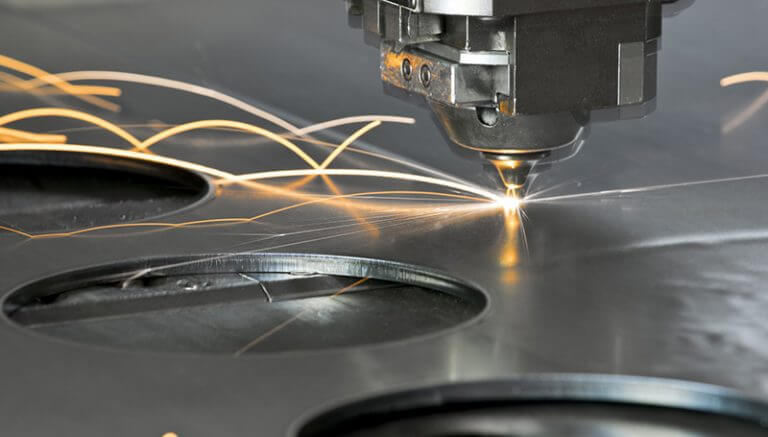
Sheet metal manufacturing or fabrication is a group of processes that use thin panels of metal (typically about 0.3 mm to 4.5 mm thick) as the stock form—as opposed to other forms like billets, bars, powder, or molten liquid metal.
Sheet metal fabrication processes can generally be divided into three categories:
- Material removal: Cutting processes like laser cutting, water jet cutting, plasma cutting, and punching
- Material deformation: Forming processes like bending, stamping, and spinning
- Assembly: Joining processes like welding and mechanical fastening
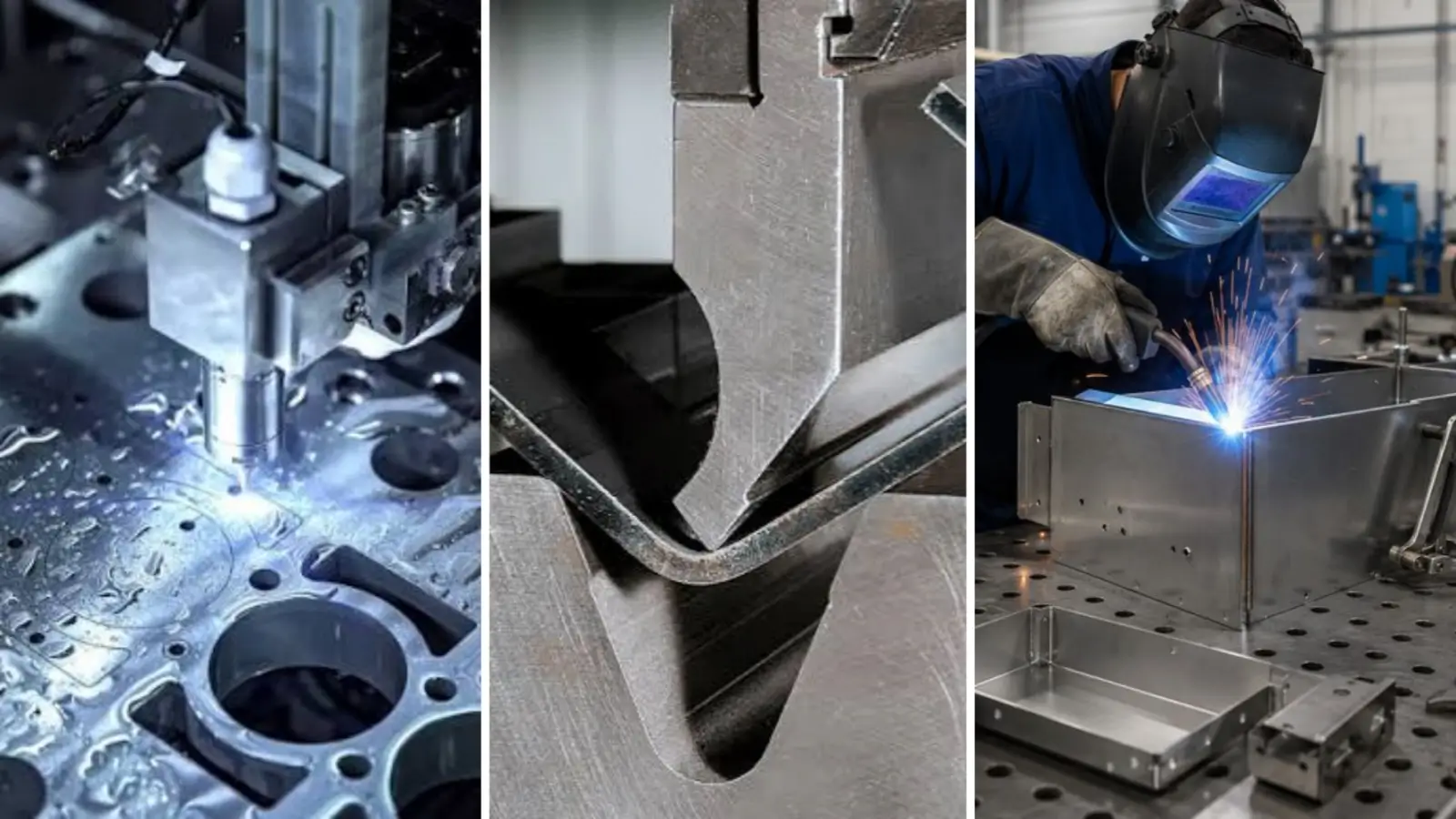
Processes across these categories use different equipment, take varying amounts of time, and require varying amounts of human labor. This means they are not all priced in the same way. For example, laser cutting is largely automated, while welding requires a high level of human skill.
A cost estimate for industrial sheet metal fabrication will typically come from the following calculations:
- Material Cost = Weight × Price per kg
- Material Removal Cost = Setup Cost + Hourly Machine Rate × (Cut Length / Cutting Speed)
- Material Deformation Cost = Setup Cost + (Number of Bends × Price per bend)
- Assembly Cost = Time × Hourly Labor Rate
- Finishing Cost = Flat Rate per Part
Factors that Affect Process Costs
As we have seen, several factors contribute to the cost of sheet metal fabrication and assembly. However, customers can broadly focus on three main things:
- The price of sheet metal stock
- Process costs
- Economy of scale
Sheet Metal Price
Not all sheet metal stock is priced the same. The table below offers a relative comparison of sheet metal prices, starting with the cheapest, carbon steel.
| Metal | Relative Cost |
| Carbon Steel | 1× (lowest), approx. $1–3 per kg |
| Aluminum | 2× |
| Stainless Steel | 3× |
| Copper | 4× |
| Brass | 4× |
Process Costs
In terms of material removal and deformation process costs, most standard sheet metal processes like cutting, punching, bending, stamping, and spinning are relatively similar in overall cost.
However, precision sheet metal fabrication parts that require many of these different processes will cost more than parts that require just one or two.
Standard sheet metal post-processing and sheet metal finishing procedures include deburring after cutting and punching, powder coating, painting, anodizing, and plating—all of which add to the total cost of parts. Plating as a post-processing step may be required for welded parts, as welding is not compatible with pre-plated sheet metal.
Order Size
Economy of scale comes into play with sheet metal fabrication, even though sheet metal parts typically do not require custom tooling. This is because each fabrication process demands setup and programming costs, and if the same setup can be used for many units, the effective cost per unit decreases.
Ordering 100+ parts typically results in unit cost savings of at least 50% compared to ordering a single part.
Larger orders also enable sheet metal nesting, in which multiple parts are cut from a standard size of sheet.
How to Reduce Sheet Metal Cost
There are several ways to reduce your sheet metal fabrication cost, from the design to the choice of material to the specified finish.
- Use standard gauges: Sheet metal comes in a wide range of thicknesses; choosing a standard gauge rather than a custom thickness ensures the raw material is easily available and affordable.
- Use looser tolerances: Specify tight tolerances only on critical dimensions; tighter tolerances require slower manufacturing and more extensive quality control, increasing the cost of the sheet metal parts.
- Exploit helpful CAD tools: Design software packages like SolidWorks are geared towards sheet metal fabrication, including helpful tools like “flattening” the design into its unfolded sheet shape.
- Reduce complexity: More bends and more cuts increases your sheet metal fabrication price, as does the number of different processes required.
- Simplify bend radii: Bends should ideally be consistent with one another and with the thickness of the sheet to reduce setup costs for custom bent sheet metal.
- Use common fasteners: Standard fasteners are inexpensive and typically do not need to be specially ordered by the sheet metal manufacturer.
- Only weld if truly necessary: Using rivets and other fasteners is more cost-effective than welding due the latter’s high labor cost; welding is also incompatible with pre-plated sheet metal.
- Ask an expert: The experienced engineers at 3ERP can help with sheet metal product design, leading to lower costs and better product performance.
Reducing Sheet Metal Costs with 3ERP
As an experienced low-volume manufacturing specialist and sheet metal fabrication factory, 3ERP has helped countless customers reduce their sheet metal fabrication cost.
Our engineers can assess your design and provide feedback on how to minimize costs, and our manufacturing rates for custom precision sheet metal are highly competitive.
To get an accurate cost estimate for industrial sheet metal fabrication, request a quote.
Frequently Asked Questions
What are some common sheet metal parts?
Sheet metal parts include simple, thin-walled products like chassis, enclosures, brackets, panels, and ductwork.
Is sheet metal fabrication more expensive than machining?
Specialist sheet metal fabrication techniques are generally cheaper than CNC machining for the production of parts like those described above. However, the range of parts suited to sheet metal fabrication is much narrower.
Is sheet metal fabrication cheaper at scale?
Yes, sheet metal fabrication has a lower unit cost in higher volumes because setup and programming costs are spread across more units.
What is the most expensive process within sheet metal fabrication?
Secondary processes like precision welding add significant cost to sheet metal parts. Standard processes like stamping can also become expensive if custom tooling is required.
What is the easiest way to reduce the price of sheet metal fabrication?
Sheet metal parts are cheaper when they are simplified and use standard material gauges, standard fasteners, and consistent bend radii. Producing parts at scale and nesting parts on a single sheet can also reduce unit costs.